What to do when industrial plant sound shapes the working environment
Industrial environments are built for output. Equipment runs continuously, materials move at scale, and processes are designed for efficiency. Noise is often accepted as part of that equation, until it begins to influence safety, communication and compliance.
Processing equipment produces a complex acoustic profile. Crushers, conveyors, pumps, and motors generate noise across a broad frequency range. The result is not a single noise source, but a layered environment where sound accumulates, reflects, and escapes through various pathways.
It requires an expert approach to industrial noise control.
Installing industrial noise control at the source
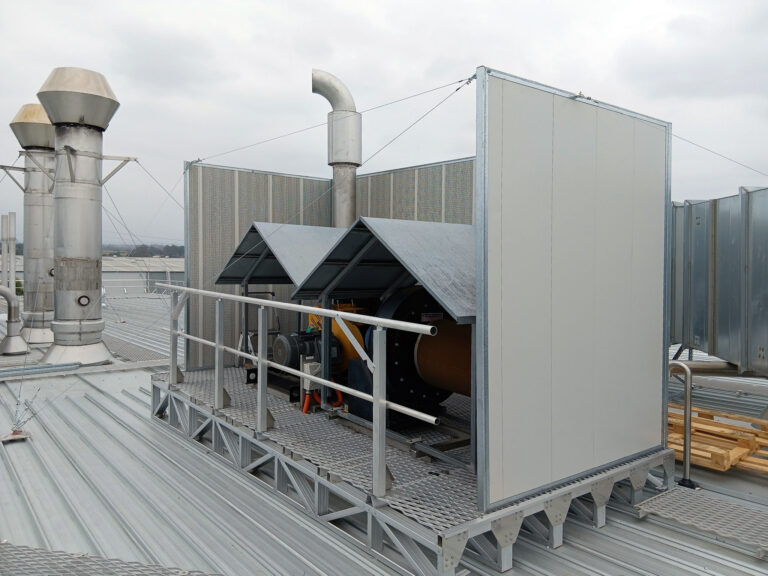
In many facilities, enclosures go in after operations have started. By that stage, sound has already established its pathways. Openings, access points, and lightweight boundaries allow acoustic energy to travel beyond intended zones.
A significant shift occurs when sound is treated as a controllable parameter, rather than a mere byproduct:
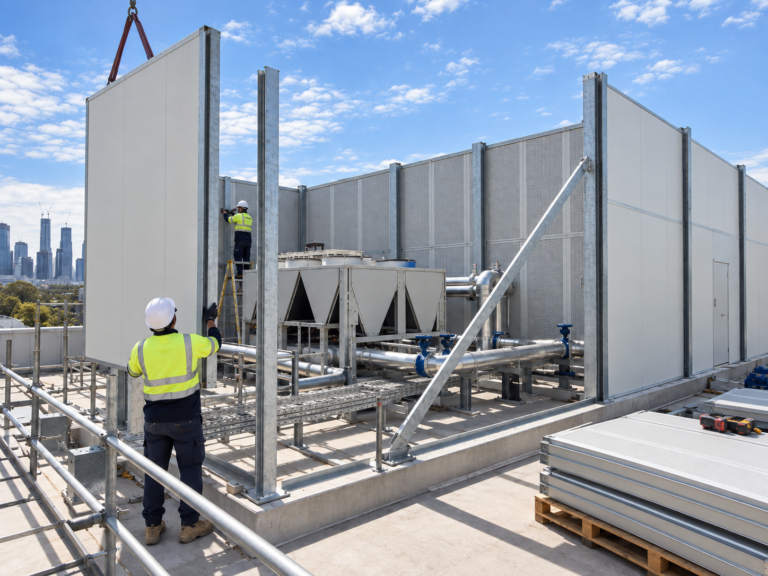
- Enclosing equipment at the source reduces noise propagation before it spreads.
- Lining internal surfaces limits reverberant buildup.
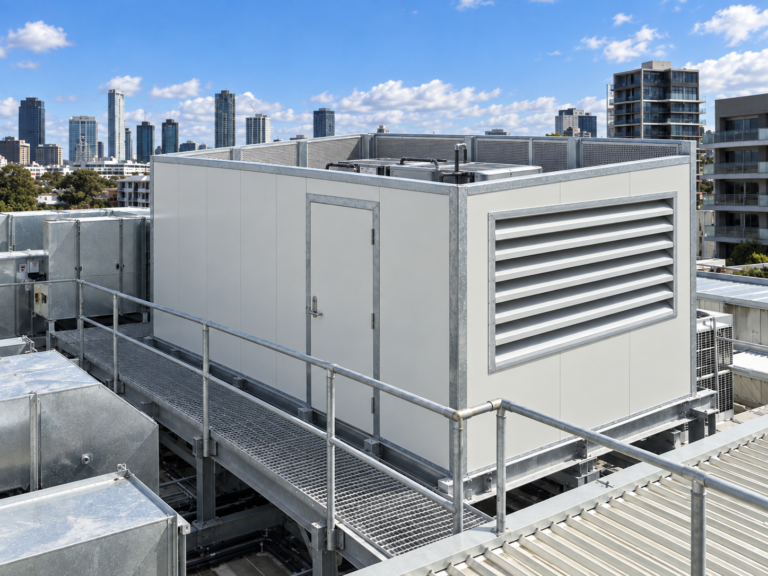
- Addressing ventilation paths ensures airflow does not become a direct transmission route for sound.
Sonic System acoustic modular panels offer a structured approach to enclosure construction, enabling facilities to establish boundaries with predictable acoustic performance. Where access is necessary, Sonic Access acoustic doors maintain sound containment without compromising usability. And for ventilated equipment, Sonic Series acoustic louvres allow required airflow while reducing transmitted sound levels.
Each element contributes to a controlled acoustic environment, achieved not by chance but with deliberate design.
Talk to us about custom industrial noise control for your facility
At AcousTech, our approach is grounded in measurement and practical application. Our aim is not to eliminate sound entirely, but to master how it behaves within complex industrial settings. That means real measurement, practical design, and genuine care for people’s hearing.
To talk to the specialists at AcousTech, call 1300 508 232.
Trusted by engineers, built for performance.
The science of silence.