
Design for maintainability, keeping acoustic treatments workable over the asset life
An acoustic enclosure that meets its target reduction on commissioning day has only shown part of what it has to do. Industrial plant is serviced, inspected, adjusted and eventually replaced over an asset life that usually runs to decades, and an enclosure not designed for that servicing is at risk the first time someone needs…
An acoustic enclosure that meets its target reduction on commissioning day has only shown part of what it has to do. Industrial plant is serviced, inspected, adjusted and eventually replaced over an asset life that usually runs to decades, and an enclosure not designed for that servicing is at risk the first time someone needs to reach the equipment inside. A maintainable acoustic enclosure treats access as a design input from concept stage, before anything is fabricated.
Maintenance around noisy plant needs more than one access door
Routine work around industrial equipment is more varied than a single access door usually allows for. Filter changes, belt and motor replacement, fan removal, bearing inspection, lubrication, cleaning and periodic instrument checks all need different combinations of access, tool clearance and, sometimes, temporary removal of part of the enclosure.
Larger jobs such as equipment replacement or a plant upgrade may need a lifting route wide enough for a crane or forklift, an isolation point reachable without entering the enclosure, and a de-energising and re-energising sequence that doesn’t depend on removing panels that were never designed to come off easily.
Where fixed platforms, walkways or ladders are needed to reach elevated equipment inside or around an enclosure, that access has to be designed to AS 1657, which sets the requirements for safe access to plant for operation, inspection and maintenance. An enclosure designed without reference to how maintenance staff will physically reach the equipment starts from an incomplete brief.
Unplanned access degrades the enclosure in predictable ways
When an enclosure doesn’t accommodate these tasks, it tends to lose performance in a few predictable ways. Panels get removed for clearance and aren’t refitted correctly. Doors get propped open for a job that runs longer than expected. Sections get modified on site, without engineering input, to fit larger replacement equipment. Each time, the performance verified at commissioning is degraded by maintenance work that had no acceptable path within the original design.
Maintenance on industrial plant is frequent and ongoing, and an enclosure that makes routine access difficult will be worked around by the people doing the work, whatever the specification intended. A treatment that only performs when nobody needs to touch the equipment won’t hold up as a durable way to control the noise it was built for.
Design access into the enclosure from concept stage
Our Sonic acoustic enclosures are specified through a staged process that treats access as part of the initial brief. The initial assessment considers equipment type and size, access for personnel and equipment, and maintenance and inspection frequency, alongside the acoustic target. The design stage then places doors and access points and works out airflow at the same time as panel type and acoustic performance targets, instead of fitting access around an acoustic design that’s already fixed.
Sonic Access acoustic doors give a tested, sealed access route for personnel or equipment. Removable roof or wall sections, lifting points and an engineer-certified support frame can be built into the enclosure where larger equipment will need to come in or out over the asset life.
The same principle covers Sonic Series acoustic louvres. Size and position them for the airflow and acoustic requirements on commissioning day, and for the ventilation load of equipment that may be serviced, adjusted or replaced later without a full redesign of the enclosure.
A packaging line enclosure
Take a packaging line enclosure built around a set of conveyors and drives. If it’s designed with one narrow access door sized for daily operator checks, a scheduled motor replacement that needs wider clearance forces a choice: an extended shutdown to dismantle panels correctly, or an improvised opening that’s unlikely to be resealed to the original standard.
Design the same enclosure from the outset with a removable panel section sized for the largest anticipated component change, rated to the same acoustic standard as the rest of the assembly, and the motor replacement becomes a planned procedure. The acoustic product is identical in both cases. What decides the outcome is whether the maintenance task was considered before the enclosure was built.
Design acoustic performance and safety together
Easier access doesn’t have to cost acoustic performance. A door or removable panel that’s easy to open and reseal correctly protects performance far better than a fixed panel that has to be forced, damaged or left ajar because there was no other way to get equipment out.
Safety requirements, including isolation points, emergency egress and AS 1657 access where elevated work is involved, carry the same weight as the acoustic brief. Where an acoustic treatment would conflict with a required safety or maintenance provision, adjust the acoustic design to accommodate it. The design task is to satisfy both together.
Plan for plant replacement and reconfiguration
Industrial plant is rarely static over its asset life. Equipment gets replaced with a different model, lines get reconfigured, and extra plant is sometimes added inside an existing enclosure footprint. A modular enclosure built from Sonic System acoustic modular panels can generally be reconfigured, extended, or partly dismantled and rebuilt around new equipment more readily than a purpose-built fixed structure, but only if the original design anticipated that kind of change. Lifting routes, panel jointing and structural support sized only for day-one equipment can become the limiting factor when that equipment is replaced with something larger or differently configured.
Facility teams reviewing an existing enclosure ahead of a plant upgrade should treat it as a design question in its own right. Confirm lifting clearances, door and panel dimensions, and structural support capacity against the new equipment’s footprint before procurement is finalised, so a mismatch doesn’t surface once the new plant is on site.
Brief the enclosure for the full asset life
An enclosure that hits its target at commissioning has met the first of two requirements. The second is that it keeps working alongside the maintenance, inspection and eventual modification the plant inside will need over its working life. Put access, isolation, lifting and future reconfiguration into the acoustic brief at concept stage.
Related Stories
-
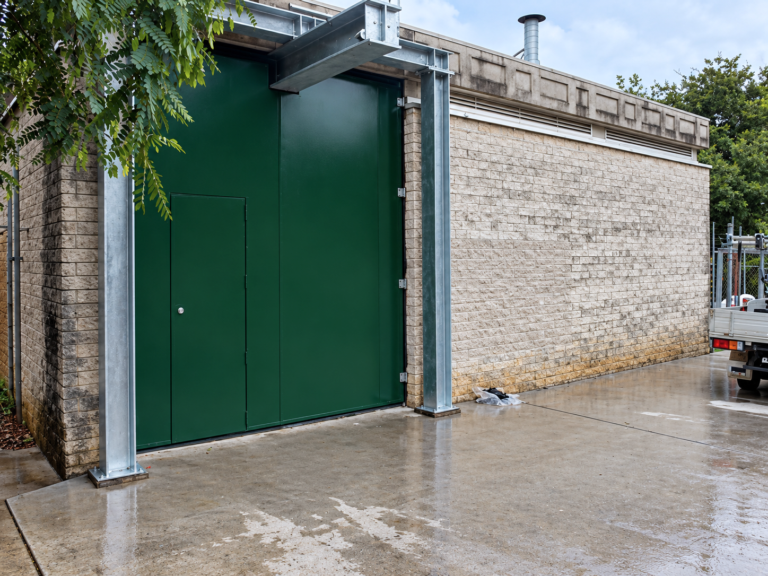
Service penetrations and acoustic integrity, small openings, large consequences
An acoustic wall, enclosure or plant room separation is specified and tested as a continuous assembly, and it rarely stays continuous once services go in. Cable trays, conduits, pipes, ducts and drainage all have to… -
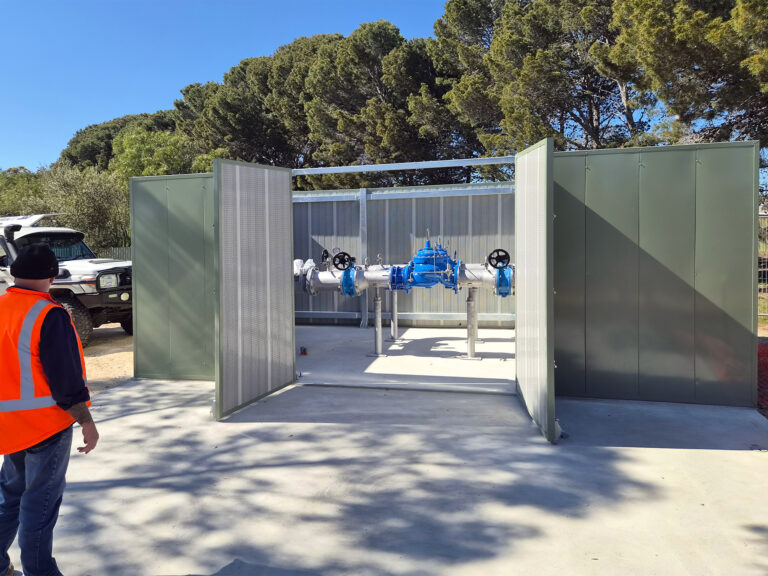
Flanking paths, why tested acoustic performance can disappear after installation
An Rw rating from laboratory testing is real, and it describes what an element achieves under the conditions it was tested in. It doesn’t automatically describe what the same panel, door or enclosure will achieve… -
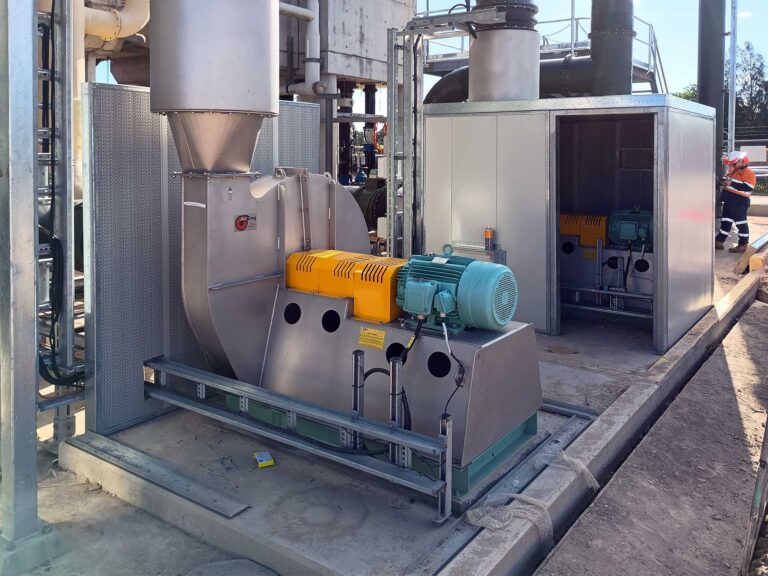
Acoustic walls and enclosures, how to decide which approach fits the plant
Whether a noisy piece of plant gets an acoustic wall or a full acoustic enclosure is often settled on budget, with the enclosure cast as the better option and the wall as the cheaper fallback….