What to do when unwanted sound becomes a problem you can’t ignore
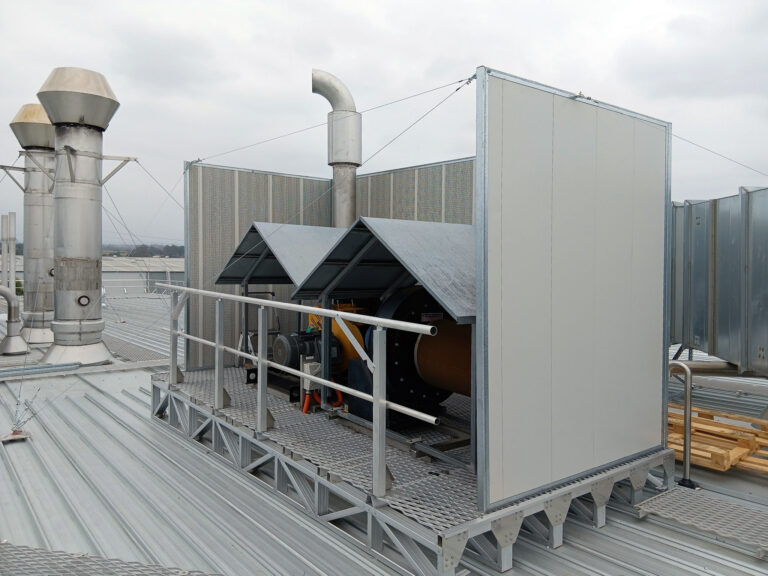
Most people don’t notice HVAC systems until they can’t ignore the noise. When HVAC noise builds up, it’s often due to a lack of HVAC noise reduction measures such as the right acoustic louvre for HVAC, or proper acoustic screen walls.
It starts as a background presence. A low hum, a tonal edge, a sense that something mechanical is pushing into spaces where it doesn’t quite belong. Not loud enough to alarm, but persistent enough to matter.
When is HVAC noise reduction necessary?
HVAC plant generates unwanted sound at multiple points. Fans create broadband energy. Motors introduce tonal characteristics. Air movement through openings adds its own signature, shaped by velocity and geometry. The system is doing exactly what it was designed to do, just without consideration for how sound behaves once it leaves the equipment.
And that’s the turning point.
Sound doesn’t stay put. It travels through air paths, reflects off hard surfaces and escapes through the easiest available openings. Intake and discharge points, access doors and lightweight enclosures all become pathways.
Once you see HVAC this way, the pattern becomes clear. The issue isn’t just the equipment. It’s how the building allows that sound to move.
This marks the shift from background noise to a performance issue.
Selecting the right HVAC noise reduction systems
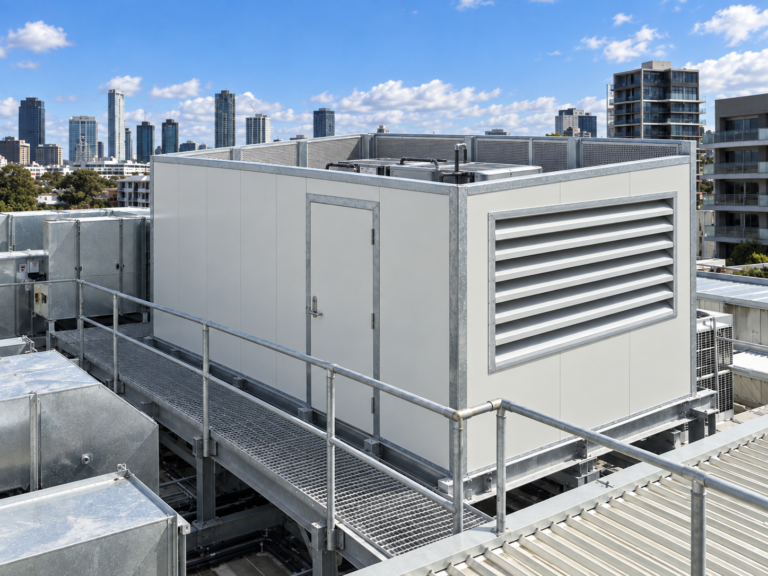
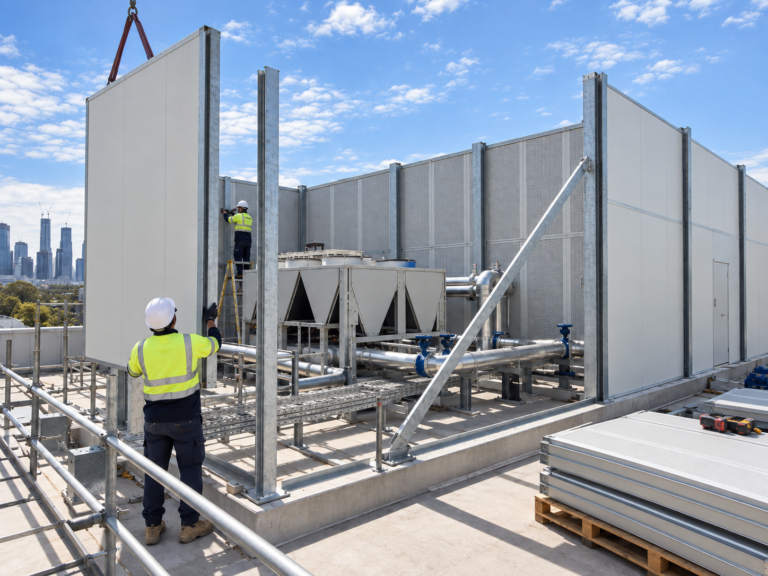
Treating airflow paths and enclosure elements as acoustic controls, rather than just functional components, aligns HVAC and acoustic performance. Openings with an acoustic louvre for HVAC reduce noise while allowing ventilation. Doors contain as well as provide access. Enclosures with HVAC acoustic screen walls, such as the Sonic System acoustic modular panels, absorb and reduce breakout, not amplify it.
Facilities like data centres and BESS sites make this thinking especially visible. High-capacity plant operating continuously means even small inefficiencies in acoustic control become noticeable over time.
Talk to us for the ideal HVAC noise reduction strategy
AcousTech approaches HVAC noise reduction differently. To us, acoustic performance is not an add-on; it’s integral to how HVAC performs in the built environment. Measured, tested and backed by NATA-accredited laboratory testing.
Match the source to the right acoustic control, and the numbers shift.
To talk to the specialists at AcousTech, call 1300 508 232.
Trusted by engineers, built for performance.
The science of silence.