Creating comfort and performance for BESS and data centres
In the world of BESS and Data Centres, silence is more than a luxury. It is essential to performance, safety and the well-being of everyone on site. From recognising the problem to selecting and maintaining the right products, each step matters.
Across our recent series, we have uncovered the science and strategy behind integrated HVAC noise reduction. Now, let’s bring these threads together and show how a holistic approach leads to resilient, future-ready facilities.
The science behind noise control
HVAC noise reduction is not about ticking a compliance box. It requires understanding how sound moves, how facilities operate, and how products such as the Sonic Series acoustic louvre for HVAC or Sonic System acoustic modular panels work with your building’s needs.
The best designs start with awareness. Unwanted noise can creep in at any stage, and proactive choices make all the difference. By considering acoustic performance early in your design, you create quieter, safer, and more productive environments.
How the products work together
There is no single fix for HVAC noise. True quiet comes when multiple products combine their strengths.
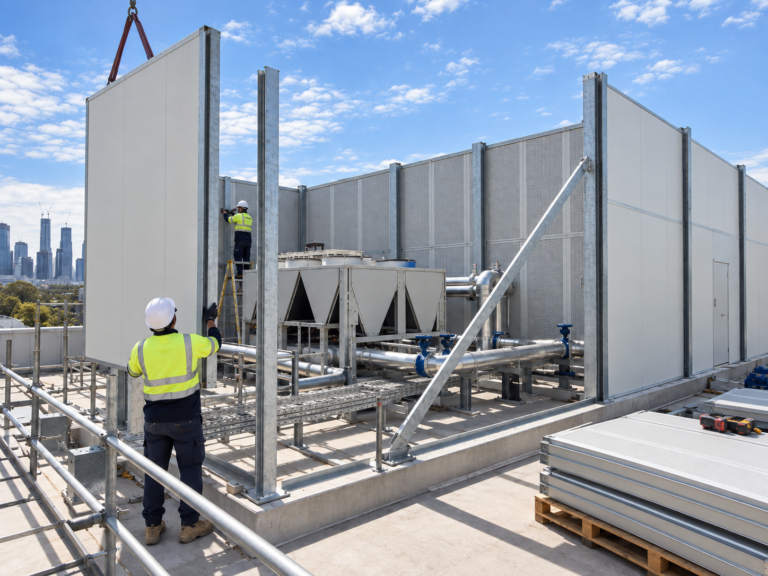
Acoustic louvres for HVAC prevent noise intrusion at important airflow points without reducing ventilation. HVAC acoustic screen walls, such as Sonic System panels, absorb and block transmitted noise to shield sensitive spaces. Careful selection of doors, duct components and enclosure details all contribute to the overall acoustic result.
When these products are specified as a coordinated package rather than afterthoughts, facilities benefit from predictability, compliance and peace of mind.
Why maintenance is the key to lasting performance
Even the most advanced acoustic designs need ongoing attention. Regular inspections and maintenance of integrated HVAC noise-reduction systems will help them perform as intended year after year. This includes checking the integrity of acoustic louvres, inspecting screen walls, and keeping all components clean and in working order.
The AcousTech difference
At AcousTech, we see every project as a partnership. Our technical specialists are committed to delivering products that perform and to sharing what we know with clients. Knowledge leads to better outcomes, now and into the future.
Take the next step with creating integrated HVAC noise reduction
Whether you’re planning a new facility or upgrading an existing site, the principles of integrated HVAC noise reduction will serve you well. Each choice, from early design through ongoing maintenance, shapes the comfort and performance of your environment.
To talk to the specialists at AcousTech, call 1300 508 232.
Trusted by engineers, built for performance.
The science of silence.