
What project managers should look for beyond the noise report
An acoustic assessment submitted as part of a project’s design documentation is a technical document. It contains noise predictions, comparisons against applicable criteria, and mitigation recommendations. For acoustic engineers, it is a familiar format that communicates performance outcomes and design dependencies. For project managers, programme directors, and client-side project leads, it is often a document…
An acoustic assessment submitted as part of a project’s design documentation is a technical document. It contains noise predictions, comparisons against applicable criteria, and mitigation recommendations. For acoustic engineers, it is a familiar format that communicates performance outcomes and design dependencies. For project managers, programme directors, and client-side project leads, it is often a document that enters the project file without the information it contains being actively used.
The gap is not difficult to understand. Acoustic assessments are written for a technical audience and for planning authorities. They are not written to communicate risk, programme dependencies, and cost implications to project delivery teams. But those elements are present in the document. They are embedded in the assumptions section, the mitigation conditions, and the technical notes about what has been modelled and what has not.
Project managers who understand what to look for in an acoustic assessment can extract information that is directly relevant to managing design risk, procurement planning, and programme delivery. Those who do not tend to discover that information later, when the cost of acting on it is higher.
What the source data in an acoustic assessment actually tells you
The first question worth asking of any acoustic assessment is what source data it uses. Acoustic modelling predicts receiver noise levels on the basis of source sound power levels. Those levels may come from confirmed equipment data sheets, from equipment supplier estimates, from comparable equipment in the supplier’s range, or from generic reference data for the equipment category. The quality of any acoustic prediction is fundamentally limited by the quality of the source data used to develop it.
An assessment that uses preliminary source data, described in the report as estimated, indicative, or assumed, carries a design risk that is often not visible in the results table. The predicted level may appear precise to one decimal place, but the underlying uncertainty in the source data could represent several decibels of variability in the outcome. When that preliminary assessment is used as the basis for a planning consent, the consent conditions are set against predicted levels that may not reflect actual equipment performance.
Project managers should confirm whether the acoustic assessment uses confirmed equipment data or preliminary assumptions, and whether the assessment has been updated as equipment selections have been finalised. Where it has not, the risk of discovering at commissioning that actual noise levels exceed consent predictions is real and should be flagged as a design risk item.
Mitigation conditions as design dependencies
Acoustic assessments commonly include statements of the form: compliance is predicted on the basis that the following acoustic measures are implemented. These statements may appear in the main text, in a summary table, or in an appendix. They describe the design conditions that the modelling assumes are in place, and without which the predicted compliant outcome is not achievable.
Those conditions represent design dependencies. If the assessment assumes that an acoustic barrier of specified height is installed at a specific location, the barrier must be designed, specified, and constructed as described. If the assessment assumes that mechanical plant exhaust is directed away from sensitive receivers, the equipment layout must reflect that assumption. Where the design evolves after the assessment was conducted and these conditions are not met, the assessment may no longer reflect the actual design.
Project managers should be able to identify the mitigation conditions in the acoustic assessment and confirm that each condition is reflected in current design documentation. A list of mitigation conditions drawn from the acoustic assessment and tracked against the design is a basic design review tool that is straightforward to maintain but rarely implemented on projects where acoustic engineering is not actively coordinated with design development.
Why the assumptions section matters for project delivery
Every acoustic assessment includes assumptions, either in a dedicated section or distributed through the body of the report. Assumptions about background noise levels, receiver locations, building facade attenuation, site layout, and equipment operating conditions all affect the predicted outcome. Where those assumptions diverge from the actual project conditions, the prediction may not be accurate.
Background noise assumptions are particularly important. Where the assessment uses a background noise level based on measurements taken under specific meteorological conditions, that measurement may not represent the quietest conditions the facility will operate under. Night-time background levels during still, clear weather can be considerably lower than the levels measured under the conditions under which the original survey was undertaken. If the assessment criterion is based on a noisier background scenario, the compliance margin in quiet conditions may be materially smaller than the report suggests.
Project managers should flag any assumption in the acoustic assessment that differs from a condition they can verify from project documentation. Where an assumption cannot be confirmed because the equipment selection is not yet finalised, the site layout is still changing, or the background noise data is preliminary, that uncertainty should be recorded as a project risk until it is resolved.
Programme and cost implications hidden in technical language
Acoustic assessments sometimes include statements about the performance requirements of acoustic treatment that have direct implications for procurement lead times and construction programme. A statement that silencer insertion loss performance should be verified by NATA-accredited laboratory testing indicates that off-the-shelf products with generic performance data will not be acceptable. Fabricated, tested products with independent certification are required. The lead time for those products is longer than for catalogue items, and the specification needs to be confirmed early in the procurement programme.
Similarly, statements about the acoustic performance of building elements, including facade transmission loss, plantroom wall construction, and acoustic door specifications, translate to specific construction details that may have cost implications not reflected in preliminary estimates. Where an assessment assumes a facade Rw value that requires acoustic glazing rather than standard glazing, the capital cost difference is material. If the acoustic assessment was not reviewed at the time the facade specification was set, that cost may not have been allowed for.
AcousTech regularly provides acoustic assessment review for project delivery teams on major projects where the brief is to translate acoustic documentation into design and procurement actions. This includes identifying mitigation conditions, confirming their reflection in design documents, and flagging specification requirements that have programme or cost implications. This engagement with HVAC and building services projects supports project managers in converting acoustic risk from a technical unknown into a managed design and procurement item.
Questions every project manager should ask their acoustic consultant
The most useful thing a project manager can do with an acoustic assessment is ask a small number of specific questions that surface the information most relevant to programme and cost management. These are not questions that require acoustic expertise to ask, only the understanding that the information is there and matters. Good project governance around acoustic risk starts here.
- Equipment data is confirmed, not estimated or assumed.
- Mitigation measures are reflected in current design drawings.
- Acoustic product lead times are understood and captured in the procurement programme.
- Assessment assumptions still match the current design and site conditions.
- Procurement documents have captured specific acoustic performance requirements, including any NATA-accredited laboratory testing obligations.
What assumptions in the assessment are not yet confirmed by finalised equipment or design data? Where those assumptions are wrong, what is the likely range of impact on the predicted outcome? What mitigation conditions in the assessment have not yet been reflected in design documentation? What acoustic products or treatment measures require fabrication or NATA-accredited laboratory testing rather than catalogue supply, and what are their lead times? What operating scenarios were modelled and what scenarios were not?
A consultant who can answer those questions clearly is providing the project with actionable information. A response that defers each question back to the technical detail of the assessment without extracting the risk relevance is not serving the project delivery team’s actual need. The acoustic engineer and the project manager have different information needs from the same document. Bridging that gap is a communication challenge as much as a technical one.
An acoustic assessment that no one on the project delivery team has read in full is a risk register entry waiting to be discovered. The information is there. The question is whether someone on the project has extracted it at a point in the programme when it can still be acted on.
Talk to the AcousTech team about your project
Related Stories
-
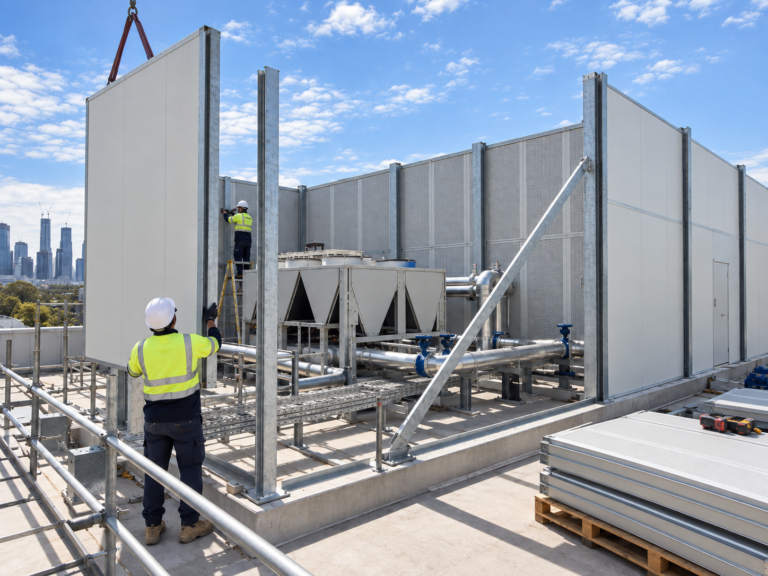
The acoustic specification brief, what consultants need from suppliers at tender stage
Three suppliers return prices against the same acoustic scope. The spread is forty per cent. Procurement reads that as a commercial finding, asks the lowest bidder to confirm compliance, receives a one line confirmation, and… -
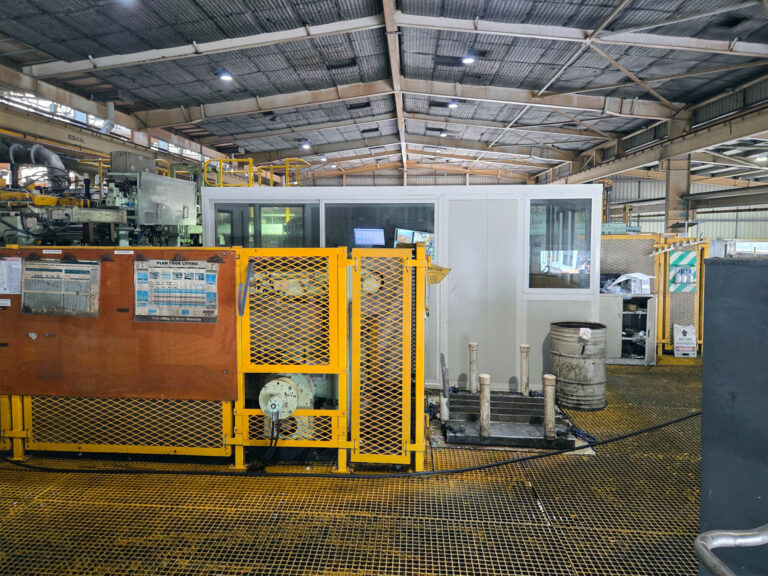
The infrastructure pipeline is growing. The approval pipeline is not.
There is more infrastructure in planning across Australia right now than at any point in the past twenty years. Defence, energy, resources, water, transport, and digital infrastructure are all in concurrent procurement or design. The… -
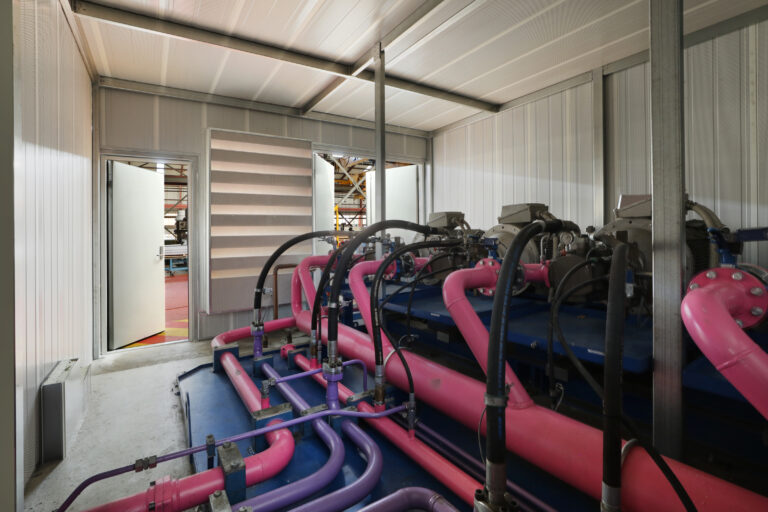
The next infrastructure bottleneck may not be power
The power conversation has dominated infrastructure planning for two years. Grid capacity, connection timelines, and energy procurement have become real programme constraints across the sector. Most of the attention in project feasibility is going to…