
Why acoustic design and acoustic compliance are not the same thing
Meeting a noise criterion and delivering a good acoustic outcome are related but not equivalent. The distinction is not semantic. It has practical consequences for occupant experience, long-term asset performance, community relations, and the likelihood of regulatory scrutiny after a facility opens. The compliance framework governing most noise assessments in Australia is based on a…
Meeting a noise criterion and delivering a good acoustic outcome are related but not equivalent. The distinction is not semantic. It has practical consequences for occupant experience, long-term asset performance, community relations, and the likelihood of regulatory scrutiny after a facility opens.
The compliance framework governing most noise assessments in Australia is based on a comparison between predicted or measured noise levels at nominated receivers and criteria derived from applicable guidelines, policies, or planning approval conditions. Meeting those criteria is a compliance outcome: the predicted or measured level is either at or below the criterion, or it is not. What the framework does not assess is whether the noise environment at the receiver is actually acceptable to the people experiencing it.
For engineers, planners, and project developers working on major infrastructure, data centre, or energy storage developments, understanding the gap between compliance and performance is a risk management issue. Projects that achieve compliance on paper but generate complaints in operation impose costs and management burdens that could have been avoided with a different design approach.
What a noise compliance assessment actually measures
An environmental noise assessment that predicts compliant outcomes at surrounding receivers is based on a set of inputs, assumptions, and modelling choices that determine the predicted level. The receiver level is calculated from sound power data for each source, adjusted for distance, ground effect, atmospheric absorption, and any barriers or screening included in the model. The result is a number compared against the applicable criterion.
The inputs to that calculation may be preliminary estimates rather than confirmed equipment data. The modelling assumptions may use standard propagation relationships that do not fully account for site-specific conditions. The operating scenarios modelled may not include all conditions under which the facility will operate. Compliance with a predicted level carries the implicit caveat that the prediction is only as accurate as its inputs.
Even where predictions are accurate, compliance at the criterion level does not mean the noise environment at the receiver is unnoticed. It means the measured or predicted level falls within the permissible range. A facility that achieves a criterion of 35dB(A) at a residential receiver by achieving exactly 35dB(A) has no compliance margin. Any deviation in operating conditions, any additional source not included in the original assessment, or any change in receiver circumstances will result in exceedance.
Designing with margin, not to the limit
Designing to the limit is a recurring issue on projects where acoustic compliance is treated as a pass/fail condition rather than a performance target. When acoustic treatment is specified to achieve a predicted outcome that just meets the criterion, there is no margin for the uncertainties inherent in acoustic prediction. The modelling confidence interval, the variation in equipment performance across units and over time, and the difference between design conditions and operational conditions all represent sources of variability that can move a compliant prediction to a non-compliant outcome.
Where project constraints allow, incorporating a design margin below the applicable criterion provides resilience against normal modelling and operational uncertainty. It also provides margin for future changes in the operational configuration of the site, changes in receiver land use, or changes in the applicable criteria themselves. Many acoustic consultants seek to build this margin into the design from the outset, recognising that it costs little to achieve at the design stage and is expensive to add retrospectively.
The question of how much margin to design for is a project risk decision rather than a technical one, but it should be made explicitly rather than defaulted to zero by designing to the criterion with no allowance for uncertainty.
What A-weighted assessments miss
Acoustic assessments in Australia are primarily conducted in terms of A-weighted noise levels, which apply frequency weighting that reduces the contribution of low-frequency components to the overall assessed level. This weighting reflects the frequency response of the human ear at moderate listening levels, but it does not fully represent the way occupants perceive persistent low-frequency noise over extended periods.
Low-frequency noise below 100 Hz propagates readily through building envelopes, excites building structures, and is perceived as a persistent intrusion at levels that may not trigger exceedance of A-weighted criteria. Tonal noise components within a broadly compliant spectrum are commonly identified as a contributing factor in community noise complaints, even on projects where the overall assessed level is within consent conditions.
A design that addresses only A-weighted compliance may miss the noise characteristics that actually determine occupant experience. Environmental acoustics practice that genuinely addresses receiver impact considers the octave-band composition of the noise spectrum, the presence and level of tonal components, and the character of the noise as experienced by receivers, rather than focusing solely on a single-number criterion.
The cost of getting it wrong after commissioning
For commercial and institutional developments, acoustic performance affects occupant wellbeing, productivity, and satisfaction in ways that translate to measurable business outcomes. A building where the mechanical plant noise is technically compliant but perceptually intrusive will generate tenant complaints and potentially rating tool shortfalls that affect the asset’s commercial value.
For industrial and energy infrastructure, the equivalent consideration is community acceptance and regulatory relationship. A facility that achieves its consent conditions but generates regular community concerns about noise is exposed to ongoing regulatory attention, potential consent review, and reputational risk that affects the developer’s ability to progress future projects in the same or adjacent communities.
The long-term cost of addressing noise complaints after a facility is operational is almost always greater than the cost of the acoustic design decisions that would have prevented those complaints. Acoustic treatment to address complaints identified in operation involves mobilisation, abatement, and construction costs that are inherently higher than treatment installed as part of original construction. It may also involve regulatory compliance costs, community engagement costs, and the less quantifiable costs of a damaged relationship with planning authorities.
Design intent as a project commitment
Acoustic design intent, when articulated at the outset of a project, establishes a performance target that is distinct from the minimum compliance condition. It might express the goal as a receiver level 5dB below the applicable criterion, as an absence of audible tonal components at nearby receivers, or as a specific indoor ambient condition for building occupants. That intent then drives equipment selection, plantroom configuration, treatment specification, and commissioning verification.
The practical value of a clearly articulated acoustic design intent is that it provides a basis for design coordination decisions that would otherwise default to the minimum. When a mechanical engineer is selecting fan equipment and has a choice between two units with different acoustic profiles, the acoustic design intent gives that choice a value. When a structural engineer is detailing penetrations through an acoustic barrier, the design intent establishes why sealing those penetrations properly matters. Acoustic performance should be considered alongside structural, architectural, and mechanical design objectives rather than verified only at the completion of detailed design.
AcousTech’s involvement in building services and HVAC projects regularly includes work where the brief is not simply to achieve compliance but to achieve a defined acoustic outcome for building occupants or surrounding receivers. The difference in the design approach that results from that broader brief is material. Acoustic panels for plantroom enclosures and building services environments are one component of an approach that starts with design intent rather than minimum criteria.
Acoustic compliance is a floor, not a ceiling. Projects that treat it as a ceiling tend to discover the difference after commissioning, when the options for addressing it are narrower and the costs are higher.
Talk to the AcousTech team about your project.
Related Stories
-
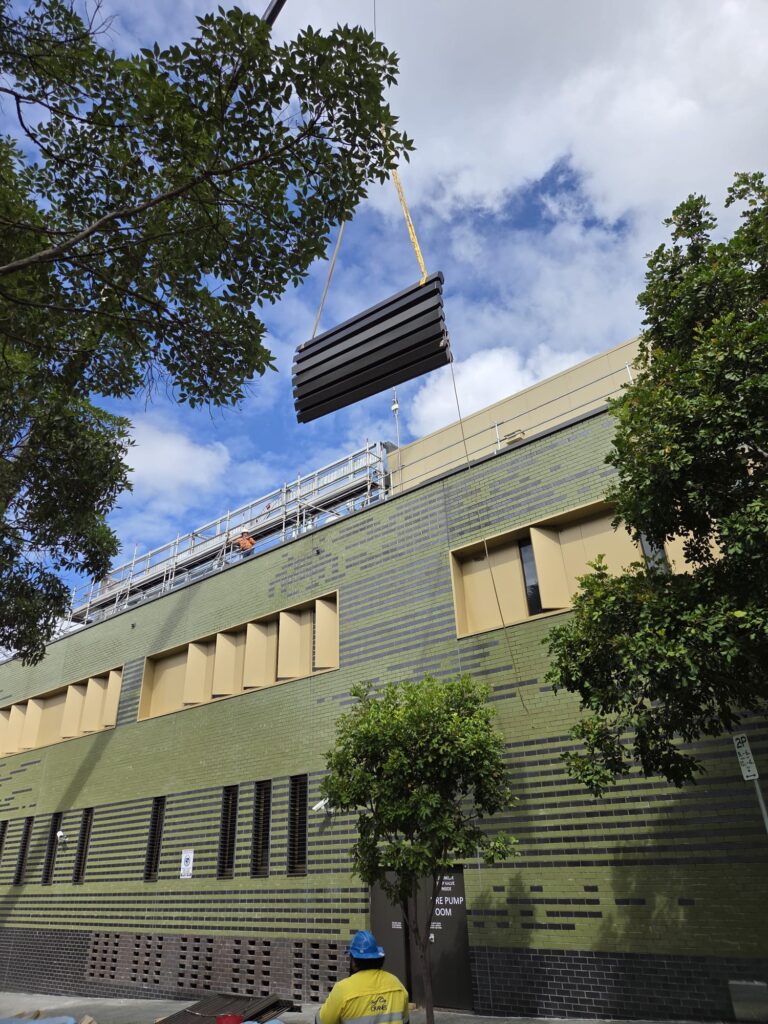
Designing acoustic infrastructure that can scale with future capacity
Most large data centre, industrial, and energy infrastructure projects are designed with staged expansion in mind. Site masterplans show future building footprints, additional mechanical plant bays, expanded cooling infrastructure, and increased electrical capacity. The capital… -
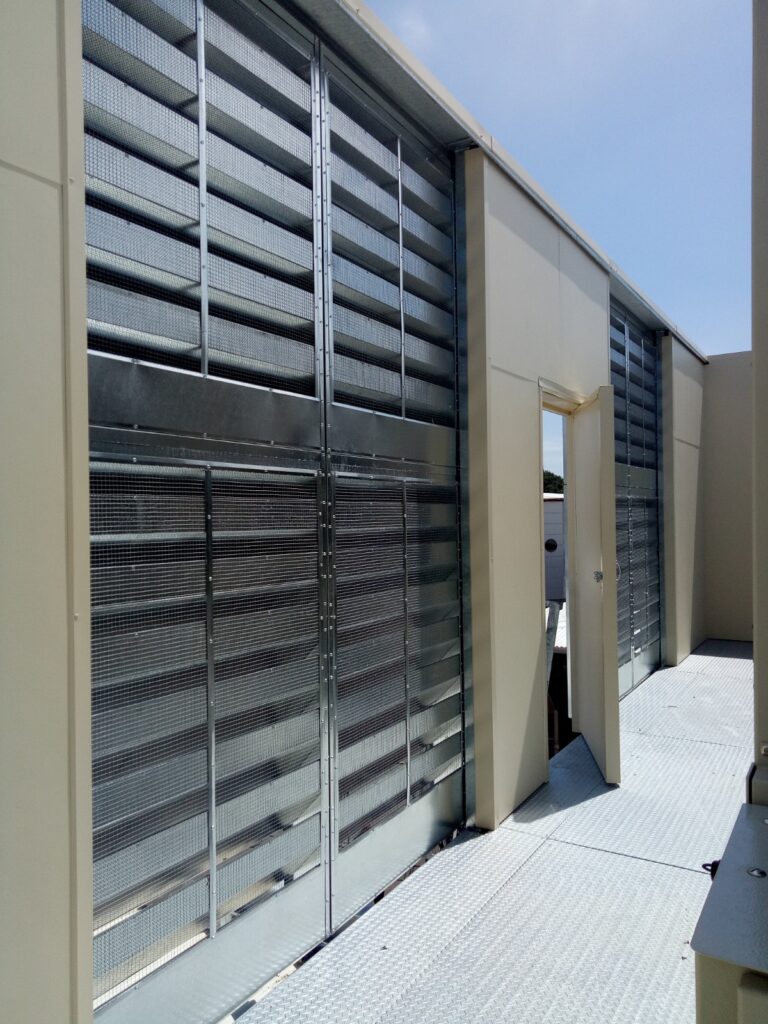
Cumulative noise impacts in clustered installations
Infrastructure and industrial development patterns have changed considerably in recent decades. Data centres that once occupied isolated suburban sites are now located in urban industrial precincts, often clustered with other continuous-operation facilities. Battery energy storage… -
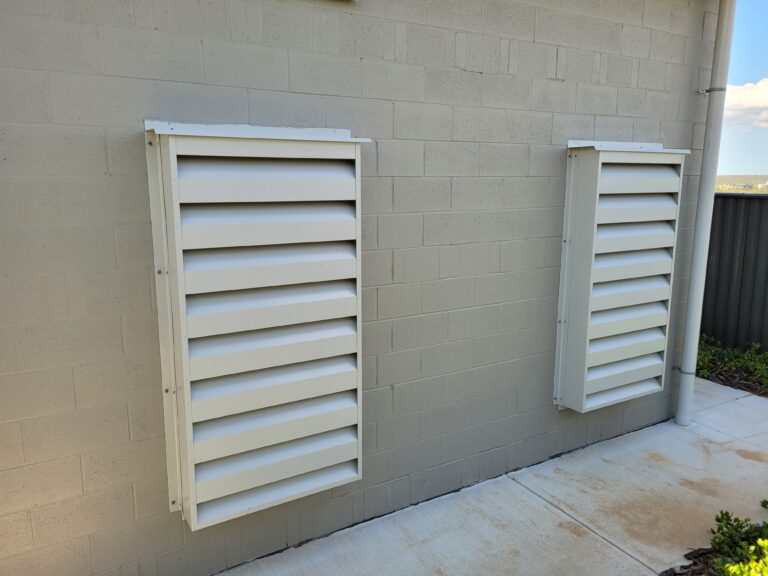
Weather, water ingress and acoustic integrity
Acoustic performance is frequently assessed at a point in time, typically at commissioning or during a formal noise survey, and the result is compared against a design target or regulatory criterion. This snapshot approach to…