
Weather, water ingress and acoustic integrity
Acoustic performance is frequently assessed at a point in time, typically at commissioning or during a formal noise survey, and the result is compared against a design target or regulatory criterion. This snapshot approach to verification is practical and is the basis of most approval processes. It does not, however, address the question of whether…
Acoustic performance is frequently assessed at a point in time, typically at commissioning or during a formal noise survey, and the result is compared against a design target or regulatory criterion. This snapshot approach to verification is practical and is the basis of most approval processes. It does not, however, address the question of whether that performance will persist across the operating life of the installation.
For outdoor acoustic elements, including louvres on building facades, attenuators on external plant, enclosures in outdoor industrial environments, and acoustic screens adjacent to infrastructure, the gap between initial performance and lifecycle performance can be large. Exposure to moisture, airborne particulates, thermal cycling, and ultraviolet radiation all act on acoustic materials over time, and not all of these effects are benign.
The practical consequence is that a system specified and installed to achieve a particular noise level may drift away from that level over years of operation, and the drift is rarely in the direction of better performance. Designing for lifecycle acoustic performance, rather than initial acoustic performance alone, requires different material selections, additional detailing, and a maintenance strategy that accounts for the acoustic implications of component degradation.
How moisture degrades absorptive infill
Porous absorptive materials, including glass fibre, Rockwool, and open-cell foam products used in attenuators and acoustic linings, perform by dissipating acoustic energy through viscous friction as sound waves cause air movement within the pore structure. This mechanism depends on the pores remaining open and accessible to airflow. When pores are partially or fully filled with water, the effective porosity of the material is reduced and the acoustic resistance of the infill changes.
The effect on performance is frequency-dependent. At high frequencies, where the acoustic wavelength is short and the viscous interaction mechanism is dominant, moisture saturation can produce reductions in absorption coefficient that are measurable and, in saturated conditions, can be large. Mid-frequency performance is also affected, though to a lesser degree. At low frequencies, where the material is already a relatively inefficient absorber in its dry state, the impact of moisture is smaller in absolute terms but present across all saturation levels.
In outdoor applications, moisture ingress occurs through direct rain contact, condensation from temperature differentials between the absorptive infill and the air stream, and capillary absorption from wet surfaces or standing water within the attenuator body. Horizontal surfaces, poorly drained sumps, and any geometry that allows water to pool in contact with the absorptive infill will accelerate degradation. The rate of degradation depends on both the moisture load and the drainage characteristics of the design.
Absorptive infill that has been allowed to remain wet for extended periods can develop biological growth, including mould and bacterial colonisation, which further modifies the pore structure and can create hygiene concerns in air handling applications. In food processing, pharmaceutical, or healthcare environments, this places a real constraint on material selection.
AcousTech specifies hydrophobic absorptive infill in its Sonic Series acoustic louvres and Sonic acoustic attenuators as standard. Hydrophobic treatment preserves acoustic porosity while preventing water absorption. Performance is therefore not contingent on the infill remaining dry, a condition that cannot be guaranteed in outdoor or plant room environments. The infill is also specified to resist biological growth, making it suitable for air handling applications in hygiene-sensitive environments without additional treatment.
Thermal cycling and material fatigue
In outdoor environments, acoustic elements are subject to repeated temperature cycles that cause differential thermal expansion between dissimilar materials. Attenuator and louvre assemblies typically combine structural steel, aluminium, and absorptive infill, each with different coefficients of thermal expansion. Over repeated cycles, differential movement causes progressive loosening of mechanical connections, separation of adhesively bonded infill from metal faces, and fatigue cracking in regions of stress concentration.
Loss of mechanical integrity in an acoustic assembly can produce gaps and bypass paths that allow sound transmission without passing through the absorptive infill. A gap of even a few millimetres around the perimeter of an acoustic panel or splitter can provide a transmission path with insertion loss well below that of the intact element, and the overall attenuation of the assembly falls toward the lower-performing path. This bypass effect is most damaging for acoustic louvres, where the geometry is designed to separate acoustic and aerodynamic functions, and a gap in the seal between blade and frame can create a direct acoustic path through the assembly.
Thermal cycling also affects sealants used at penetrations, joints, and frame connections. Standard sealants have a finite thermal cycling life, and sealant failure at acoustically critical joints, such as between an acoustic louvre and a wall opening, can introduce flanking paths that negate a material portion of the element’s transmission loss.
Material selection for environmental durability
Designing outdoor acoustic elements for durability requires matching material selection to the environmental conditions of the installation, which vary considerably between coastal, industrial, high-humidity, and arid environments.
Hydrophobic mineral wool products perform better in outdoor environments than untreated glass fibre at equivalent thickness and density. Closed-cell materials that derive their acoustic properties from surface absorption rather than internal porosity are inherently more moisture-resistant but typically provide lower absorption coefficients per unit thickness, which needs to be accounted for in the acoustic design.
Structural components exposed to the environment require corrosion protection appropriate to the installation class. In coastal or industrial environments with elevated chloride or acid loading, standard galvanised coatings may be insufficient for the expected service life, and powder-coated aluminium or stainless steel construction may be warranted for components where surface corrosion would compromise mechanical integrity or create crevice paths for moisture ingress into the absorptive infill.
AcousTech’s Sonic Series acoustic louvres [link] are designed with drainage integrated into the blade geometry and corrosion protection appropriate to Australian environmental conditions. These design features are standard rather than optional, reflecting the expectation that outdoor acoustic elements will be exposed to weather across a service life measured in decades.
Maintenance access and lifecycle planning
Even well-designed outdoor acoustic elements require periodic inspection and maintenance to verify that performance is being maintained. Maintenance programmes that cover structural components and coatings but do not include an absorptive infill condition check are missing a component that directly affects acoustic output.
Inspection of absorptive infill should assess moisture content, evidence of biological growth, infill integrity and bonding, and the condition of perimeter seals and mechanical connections. The frequency of inspection depends on the environmental conditions and the criticality of the acoustic performance. For installations where a compliance certificate is maintained on the basis of the original commissioning measurements, performance drift that takes the system outside compliance is a liability that routine inspection would identify before it becomes a formal problem.
Design for maintainability requires that absorptive infill is accessible without disassembly of structural elements, that drainage points are visible and cleanable, and that replacement of acoustic components is possible without specialist tools or significant disassembly of the surrounding structure. Designs that treat the acoustic element as a permanent fixture with no serviceable components create maintenance risks that may not be apparent until performance has already deteriorated.
Acoustic performance of outdoor elements is not a fixed quantity. It is a function of the initial design, the materials specified, the quality of installation, and the maintenance regime applied over the life of the asset. Moisture ingress, thermal cycling, and material degradation all erode performance over time, and the rate of erosion depends on choices made at the design stage. Specifying hydrophobic absorptive infill, designing drainage and ventilation into attenuator and louvre geometry, selecting corrosion protection appropriate to the environmental class, and planning maintenance access from the outset are not premium features. They are the baseline requirements for any outdoor acoustic installation expected to hold its performance across a working life.
Talk to the AcousTech team about your project.
Related Stories
-
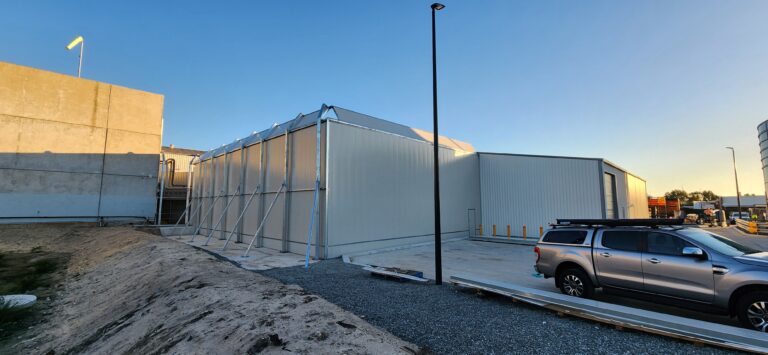
The cost of late-stage acoustic changes on Tier One projects
On many major construction projects, acoustic engineering is engaged early enough to satisfy planning approval, but not early enough to influence design. Equipment selections proceed under the assumption that acoustic compliance will be confirmed once… -
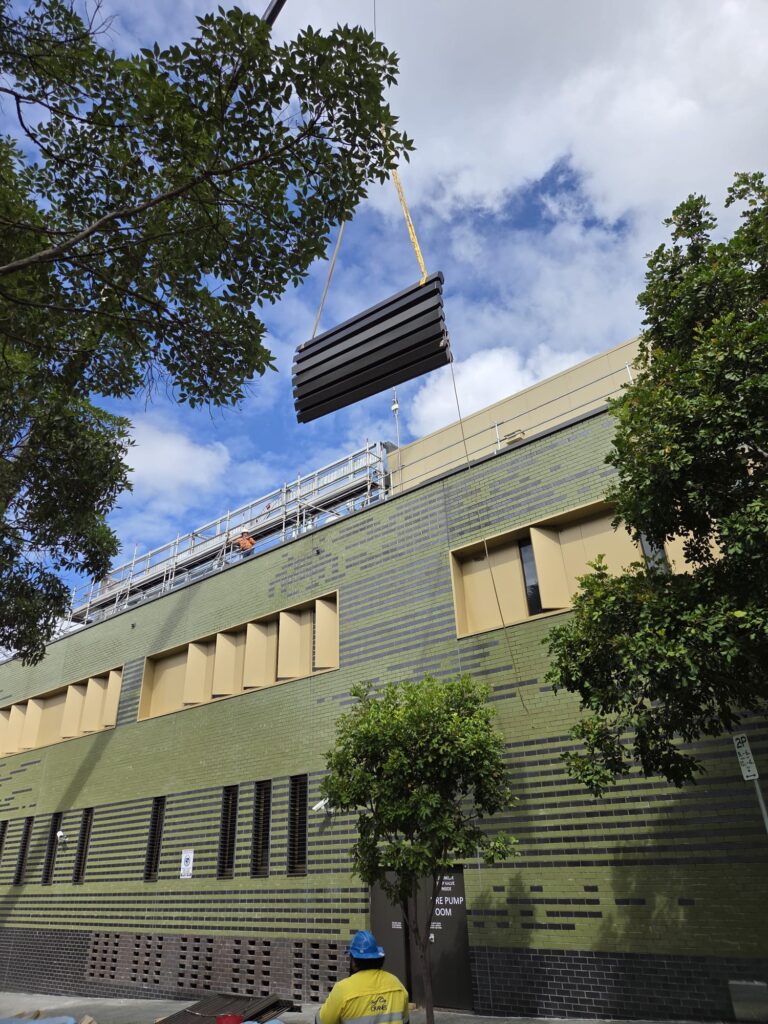
Designing acoustic infrastructure that can scale with future capacity
Most large data centre, industrial, and energy infrastructure projects are designed with staged expansion in mind. Site masterplans show future building footprints, additional mechanical plant bays, expanded cooling infrastructure, and increased electrical capacity. The capital… -
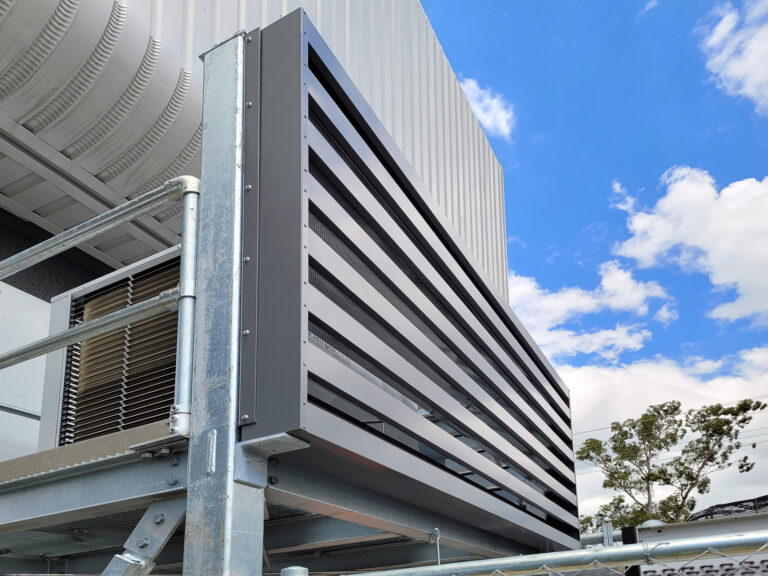
Why acoustic design and acoustic compliance are not the same thing
Meeting a noise criterion and delivering a good acoustic outcome are related but not equivalent. The distinction is not semantic. It has practical consequences for occupant experience, long-term asset performance, community relations, and the likelihood…