
Noise risk and community acceptance in BESS project design
Battery energy storage systems are one of the fastest-growing infrastructure categories in Australia. As installations increase in scale and move closer to residential and rural communities, acoustic performance is becoming a design consideration that project teams can no longer treat as peripheral. The noise profile of a BESS facility is distinct from the industrial plant…
Battery energy storage systems are one of the fastest-growing infrastructure categories in Australia. As installations increase in scale and move closer to residential and rural communities, acoustic performance is becoming a design consideration that project teams can no longer treat as peripheral. The noise profile of a BESS facility is distinct from the industrial plant that most acoustic frameworks were developed to address, and that distinction has consequences for planning approvals, community acceptance, and operational outcomes.
Site selection for BESS installations is driven primarily by grid connection requirements, land cost, and planning zone compatibility. Acoustic separation from sensitive receivers is rarely a primary criterion. The consequence is that many BESS developments are sited in locations where the noise characteristics of the facility create community acceptance risks that are not identified until the planning approval process is already advanced.
As the energy storage sector matures, acoustic considerations are becoming an established component of planning risk. Project teams that engage with this early in design are better positioned to manage it than those that treat acoustic compliance as a documentation exercise.
The noise profile of a BESS installation
A utility-scale BESS installation produces noise from two primary source categories: power electronics and thermal management. Inverters and power conversion systems generate tonal noise components whose audible character depends on inverter topology, switching strategy, and operating conditions. Cooling systems, whether air-cooled heat exchangers, cooling towers, or HVAC plant serving battery enclosures, generate broadband noise with notable contributions at low and mid frequencies.
The tonal character of inverter noise is the most problematic component from a community acceptance perspective. Tonal noise in an otherwise quiet environment is perceived as distinctly more intrusive than broadband noise at equivalent levels. Assessment methodologies in most Australian jurisdictions may apply a tonal adjustment, commonly 5dB, where identifiable tonality is present. For a BESS installation in a quiet location, this adjustment can be the difference between compliance and non-compliance without any change in the physical noise level at the receiver.
Large BESS installations may comprise dozens of battery enclosures, each with associated inverters and cooling equipment. Unlike many industrial facilities, BESS noise rarely comes from one dominant source. The challenge is the cumulative contribution of dozens of relatively modest noise sources operating simultaneously. The cumulative noise from a distributed array of sources across a site reflects the combined contribution of all simultaneously operating sources, their spatial distribution, and the propagation geometry to surrounding receivers. This cumulative characterisation is necessary to a meaningful pre-approval acoustic assessment.
When consent-stage modelling meets operational reality
Planning authorities across Australian jurisdictions are applying increasingly detailed acoustic conditions to BESS development approvals. Conditions commonly include specific noise limits at nominated receivers, requirements for post-commissioning verification measurements, and provisions for operational adjustments if measured levels exceed approved criteria.
Many BESS developments encounter the situation where noise conditions are based on acoustic modelling undertaken before equipment selections were finalised. When confirmed equipment specifications become available, sound power levels or tonal characteristics differ from the preliminary assumptions used in the modelling. Bridging this gap between consent-stage predictions and operational reality is a recurring challenge.
For project developers, the implication is that planning approvals granted on the basis of preliminary acoustic modelling carry a residual risk that the operating facility may not achieve the predicted outcomes without acoustic treatment measures that were not included in the capital estimate. Managing this risk requires the acoustic assessment to be updated as equipment selections are confirmed, and acoustic treatment to be specified and costed before construction begins rather than after.
Acoustic treatment for inverter and cooling noise
Acoustic treatment for BESS installations must address both the tonal inverter noise and the broadband cooling noise, which have different frequency profiles and respond differently to available treatment measures. Standard broadband attenuators sized for mid-frequency performance provide limited attenuation at the tonal frequencies characteristic of power electronics. Addressing tonal inverter noise requires either treatment specifically designed for the relevant frequency range or enclosure measures that attenuate the source before it propagates from the battery enclosure.
Cooling system noise on BESS installations shares characteristics with other large-scale mechanical plant. Forced-draft heat exchangers and cooling towers generate broadband noise, with the potential for tonal components from fan blade pass frequencies where variable-speed drives are used. Acoustic louvres on air intake and exhaust openings can provide attenuation where the free area requirements of the cooling system permit. Attenuators on ducted air pathways address specific propagation routes where louvres alone are insufficient.
The thermal management requirements of battery storage systems impose constraints on acoustic treatment that do not apply to other industrial plant. Batteries operate within defined temperature ranges, and cooling systems must deliver sufficient airflow under peak ambient conditions. Acoustic treatment that increases system resistance and pressure drop can potentially compromise thermal performance. The acoustic performance of louvres, attenuators, and enclosures must therefore be considered alongside pressure drop, free area, and thermal duty, as these parameters are fundamentally linked. This conflict must be resolved at the design stage rather than discovered during commissioning.
Managing acoustic risk before construction
The cost curve for acoustic mitigation on BESS projects follows the same pattern as other major infrastructure. Options are broadest and cheapest when acoustic risk is identified during site selection and feasibility, progressively narrowing as design is advanced, equipment is ordered, and construction commences. Post-commissioning acoustic remediation on a BESS site, where enclosures are fixed, equipment is installed, and community concerns have already been activated, is expensive and disruptive.
Design-stage acoustic work should include preliminary noise modelling to identify sensitive receivers and establish distance and screening requirements, followed by equipment specification that includes confirmed acoustic performance data from suppliers. Where the site geometry and receiver distribution indicate that standard products are unlikely to achieve consent conditions, that information is most useful when it is available before equipment procurement rather than after.
AcousTech’s Sonic acoustic attenuators and Sonic Series acoustic louvres have been specified on energy infrastructure projects where the combination of broadband and tonal noise sources requires treatment products with confirmed octave-band performance data. The HVAC and building services expertise AcousTech applies to mechanical plant noise is directly relevant to the cooling system noise management challenges common across BESS developments.
Stakeholder engagement on acoustic matters is most productive when it begins before the community has formed a view about the facility. Proactive communication about the acoustic design approach, the criteria being applied, and the verification process planned for post-commissioning tends to produce better outcomes than reactive engagement once operational noise has generated complaints. For BESS developments in locations with no recent industrial precedent, managing community expectations from the outset is a component of the approval risk strategy, not an afterthought.
What this means for BESS project delivery
The rapid growth in utility-scale BESS development in Australia has outpaced the development of sector-specific acoustic guidance. Project teams are applying frameworks developed for industrial and HVAC contexts to a facility type with a distinct noise profile, and the results are not always satisfactory.
As the sector matures and planning authorities accumulate experience with BESS approvals, acoustic conditions are becoming more detailed and compliance verification more rigorous. Project teams that treat acoustic engineering as an integral part of the development process are building a track record that supports planning approvals and community acceptance. Those that treat it as a documentation formality risk discovering the real cost of that approach during commissioning or post-occupancy.
Identifying acoustic risks during concept design provides greater design flexibility, lower mitigation costs, and stronger planning outcomes than attempting to resolve noise issues after equipment has been selected or installed.
Talk to the AcousTech team about your project.
Related Stories
-
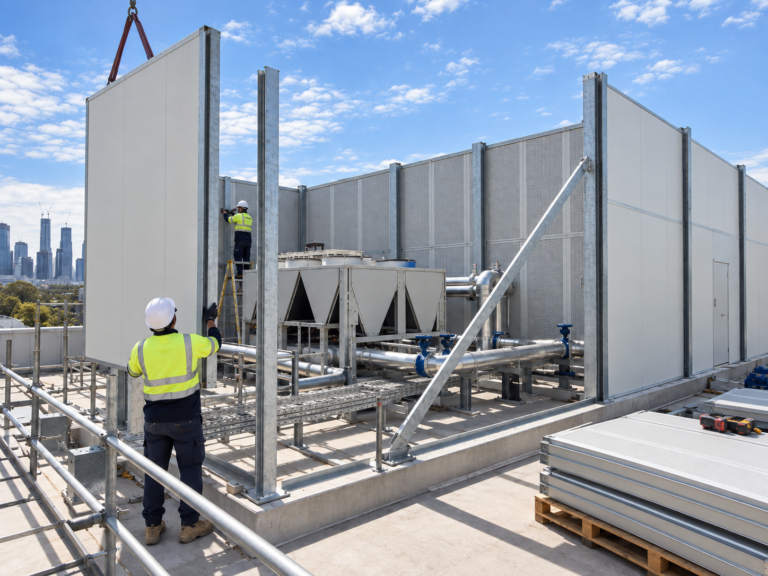
The acoustic specification brief, what consultants need from suppliers at tender stage
Three suppliers return prices against the same acoustic scope. The spread is forty per cent. Procurement reads that as a commercial finding, asks the lowest bidder to confirm compliance, receives a one line confirmation, and… -
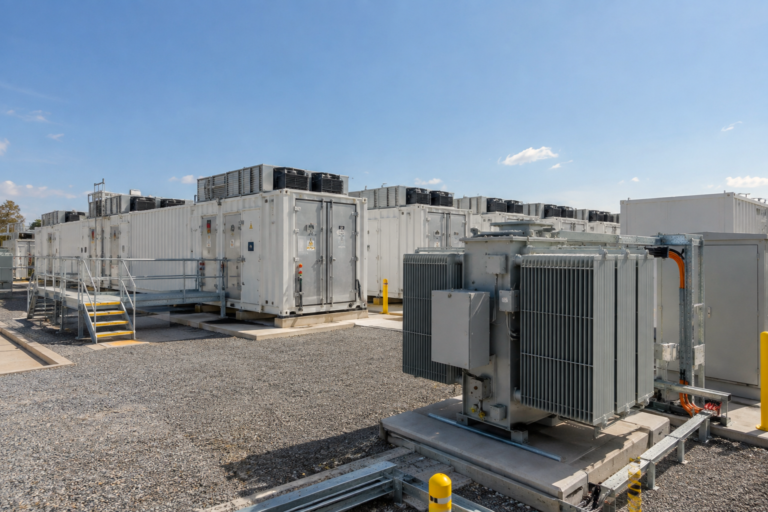
BESS noise 101, fans, chillers, inverters and transformers explained
Battery energy storage is often described as quiet technology, and at the cell level that is true. There is no combustion, no reciprocating machinery and no prime mover. Everything around the cells is a different… -
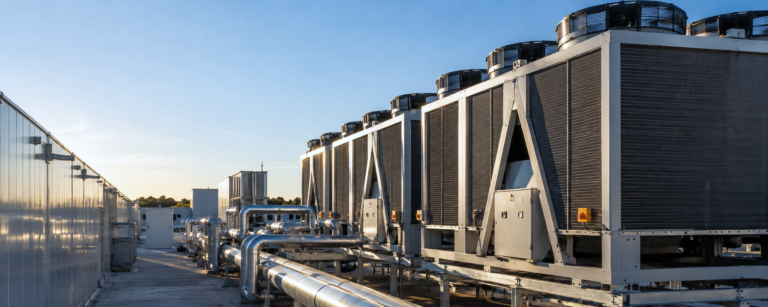
Data centre noise 101 for project teams, where the noise actually comes from
Most data centre noise summaries are written as a list of equipment. Chillers, cooling towers, fans, transformers, generators. The list is accurate and not especially useful, because it does not tell a project team which…