Applying the Science of Silence to help BESS projects meet Australian EPA standards
Battery Energy Storage Systems are transforming the way electricity is distributed across Australia. They store power, smooth out renewables and keep critical services running. Yet behind the promise of clean energy sits a practical reality: the equipment that keeps batteries at the right temperature and converts their power also makes noise. Fans, HVAC units, transformers and inverters hum away, often close to residential or environmentally sensitive areas.
At AcousTech, part of the Flexshield Group, we dedicate our work to the Science of Silence. We combine technical insight with a drive for innovation to help battery storage projects manage sound from the ground up.
Where sound originates in a BESS site
A BESS looks like a neat line of containers, but each module is alive with support systems. Cooling fans regulate battery temperatures. Inverters and transformers convert and condition power. Backup generators stand ready for outages. This network of equipment produces a complex sound signature that can travel well beyond the perimeter fence.
Meeting EPA expectations
Australian EPA authorities set clear limits on environmental noise. Because BESS projects are often situated near communities, a small increase in decibels can prompt complaints or compliance action.
Designing with acoustics in mind from day one is the simplest way to keep a project on track.
Acoustic infrastructure designed for energy storage
AcousTech leverages Flexshield’s engineering expertise to design noise control solutions that are both precise and practical. For a typical BESS installation, we may recommend
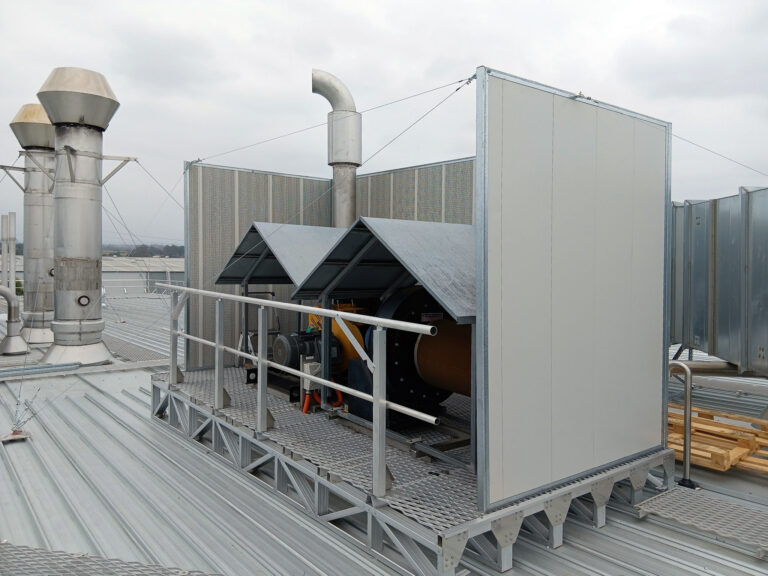
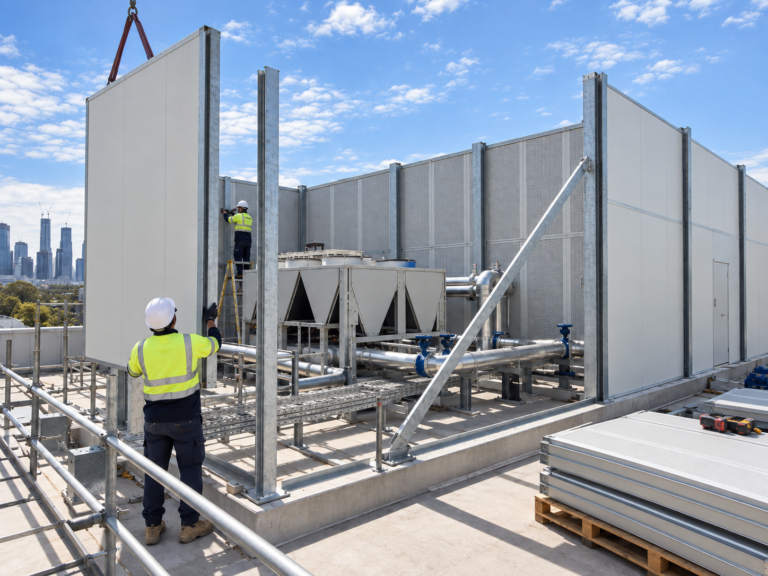
- Custom acoustic screens around HVAC systems or inverters to reduce transmission to neighbours
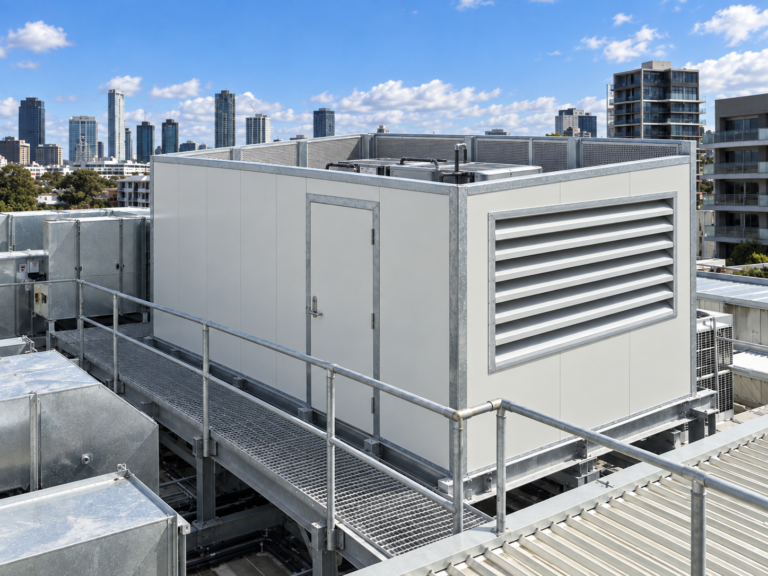
- Sonic Access acoustic doors to maintain the acoustic performance of plant enclosures while still allowing safe access
- Sonic Series acoustic louvres to let cooling air flow without allowing noise to escape
- Acoustic curtains or pipe lagging for complex services where rigid panels cannot be used
Every component is tested by NATA and built for Australian conditions.
Meeting EPA compliance from the outset
Lowering noise levels is not only about technical excellence. Sound control built into the design phase helps BESS projects align with EPA requirements before commissioning. This reduces the likelihood of complaints, avoids costly retrofits and creates a smoother approval process. It reflects AcousTech’s commitment to combining innovation with responsibility as part of the Science of Silence.
Proven expertise
With more than two decades of experience in the Flexshield Group, AcousTech combines rigorous testing, acoustic modelling and installation support with a genuine passion for sound solutions. We believe silence can be engineered as carefully as any other part of a BESS, and we are always looking for new ways to do it better.
AcousTech is powered by Flexshield and dedicated to the Science of Silence. To see how we can help you design a quieter BESS from the outset, talk to the specialists today.
To talk to the specialists at AcousTech, call 1300 508 232.
Trusted by engineers, built for performance. Powered by Flexshield.
That’s the Science of Silence.