The resources sector is in a construction phase that goes beyond anything seen in the last decade. It is not simply a capacity expansion. The nature of what is being built has changed. The transition from raw material export to domestic processing is generating a new category of facility, and those facilities come with a different set of acoustic requirements than the extraction infrastructure they sit alongside.
Iron ore, lithium, copper, nickel, and rare earth processing all involve high-energy mechanical processes. The noise profile of a processing facility is not the same as a mine site. The plant is heavier. The processes run continuously. The machinery operates at frequencies that attenuate differently than blasting or earthmoving. Managing that noise at the facility boundary requires specific acoustic design, not a repurposed mine site specification.
Site boundary conditions in processing environments
Processing facilities are being built in locations that were previously considered remote. That is changing. The push to site processing closer to ports, to shared infrastructure corridors, and to energy supply is placing these facilities in proximity to other land uses. Communities, pastoral operations, and other industries are closer than the extraction sites they feed.
Noise at the site boundary is a condition of approval in most of these projects. The conditions are specific. They set numerical limits tied to background noise levels and time of day. Demonstrating compliance requires acoustic modelling at feasibility, acoustic assessment at design, and noise monitoring at commissioning and during operation.
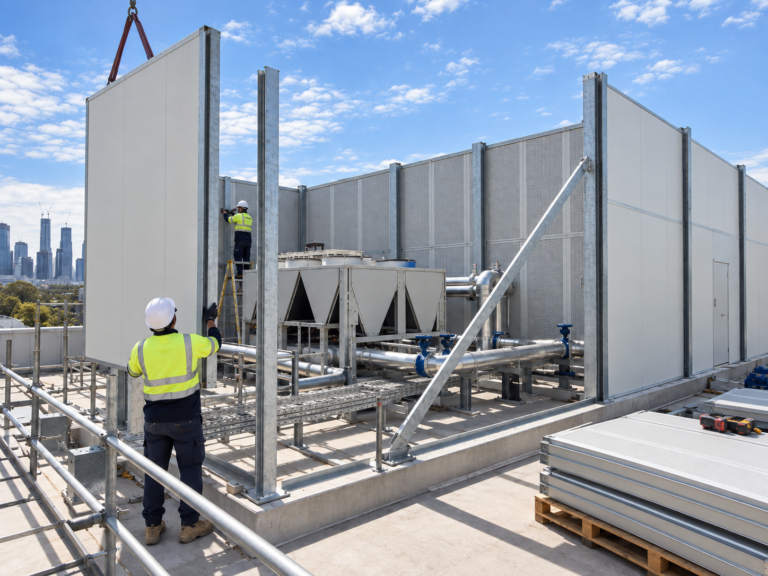
Sonic acoustic noise walls are one of the primary tools for managing that boundary condition in open processing environments. The design of a barrier that performs requires understanding the dominant noise sources, their height and directional characteristics, and the geometry of the site between the source and the receiver. A barrier specification derived from a generic industrial standard will not necessarily meet the conditions set by the approval. The modelling needs to reflect the actual site.
Getting the barrier design right early prevents a common problem. Facilities that commission with a noise condition failure face remediation options that are limited by what has already been built. Adding height to an installed barrier is expensive. Repositioning a barrier after structures are up is sometimes not possible. The modelling investment at design stage is proportionally small compared to the cost of remediation.
Ventilation in enclosed processing buildings
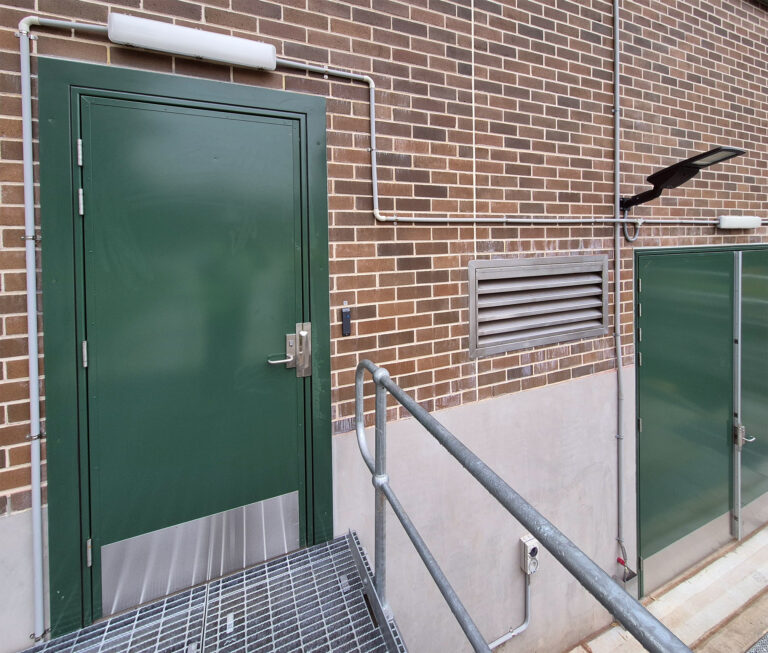
Not all processing infrastructure is open. Hydrometallurgical facilities, battery material processing, and certain mineral refinement processes operate inside enclosed buildings. These buildings ventilate through the facade. The louvres at those openings manage airflow and noise simultaneously.
The free area requirement in a processing building is high. These facilities generate heat. The ventilation load is high. Louvres that constrain airflow to achieve acoustic attenuation create thermal problems inside the building. Louvres that prioritise free area without acoustic performance create noise problems at the boundary.
The Sonic Series acoustic louvres address that trade-off through blade configuration. The range includes configurations that deliver useful acoustic attenuation while maintaining adequate free area for industrial ventilation loads. Selecting the right configuration requires calculating both the ventilation requirement and the attenuation required at the boundary. Both numbers need to be confirmed before the facade is specified.
What this means for resources sector project teams
Processing infrastructure projects in the resources sector are complex builds. They involve heavy civil, structural steel, mechanical, electrical, and process equipment all working to a compressed programme. Acoustic design is not always resourced early in that environment. It tends to come in after mechanical and process design is advanced.
That sequencing creates risk. Noise barriers designed around a mechanical plant layout that subsequently changes need to be redesigned. Louvre specifications confirmed before the ventilation load is finalised may need to be revised. The more the acoustic work can be progressed in parallel with the mechanical and process design, the less rework the programme absorbs.
Australia’s resources sector is building facilities that will operate for decades. The acoustic specification set at design stage will determine whether those facilities can operate without restriction under their approval conditions. Getting it right at the start is the lower-risk path.