
Why acoustic performance can be lost between design and construction
An acoustic treatment scheme that is well-designed and correctly specified can still fail to deliver its intended performance if the gap between design documentation and site execution is not actively managed. The mechanisms by which acoustic performance is lost during construction are well understood by acoustic engineers but rarely communicated to the project teams responsible…
An acoustic treatment scheme that is well-designed and correctly specified can still fail to deliver its intended performance if the gap between design documentation and site execution is not actively managed. The mechanisms by which acoustic performance is lost during construction are well understood by acoustic engineers but rarely communicated to the project teams responsible for managing site works. The result is that installation quality issues that would be straightforward to prevent are instead discovered during commissioning measurement, at which point remediation is disruptive and expensive.
The gap between acoustic design intent and acoustic outcome is not primarily a product quality problem. Correctly specified acoustic products, correctly installed, generally perform in accordance with their specifications. The performance losses that occur between design and construction arise from installation practices, design coordination failures, and site changes that are not evaluated for their acoustic implications before they are implemented.
Managing this gap requires acoustic quality assurance to be treated as a construction management activity, not just a design activity.
How penetrations and flanking paths undermine acoustic assemblies
Acoustic assemblies, including plantroom walls, floor and ceiling constructions, and acoustic enclosures, achieve their rated sound transmission performance when they are constructed as designed, with all joints sealed and no uncontrolled apertures. Even relatively small uncontrolled penetrations can reduce the effective sound insulation of an otherwise well-performing acoustic assembly by many decibels.
Airborne sound energy follows the path of least acoustic resistance. An aperture in an acoustic wall, even one that represents a small fraction of the total wall area, provides a low-resistance transmission path that can dominate the performance of the assembly at frequencies where the wall itself provides high attenuation. The investment in a high-performance acoustic assembly is largely wasted if penetrations through it are not sealed to the same acoustic standard.
Penetrations through acoustic assemblies are a routine feature of construction. Services routes that are established during design coordination pass through walls, floors, and ceilings throughout a building. The requirement to acoustically seal each penetration is typically documented in the acoustic specification, but the execution of that sealing on site is rarely subject to acoustic-specific quality inspection. Services installers who are not aware of the acoustic significance of penetration sealing may complete a penetration without sealing, or use a generic fire-stopping product that does not provide the acoustic performance the specification requires.
Installation quality and its effect on acoustic performance
Acoustic panel systems, attenuators, and louvre installations each have installation requirements that are central to acoustic performance. Panels that are specified with a defined mass per unit area and a particular facing configuration must be installed with the correct components in the correct sequence. Substitutions of facing materials, changes to panel thickness, or installation without the specified sealant at panel joints each represent departures from the specification that reduce the as-installed performance below the design intent.
On major construction projects, acoustic products are typically installed by mechanical or general building contractors whose primary expertise is not acoustic installation. The acoustic specification is one of many technical requirements they are managing simultaneously. Where the acoustic requirements are not highlighted in the contractor’s quality plan and subject to inspection hold points, installation quality issues may not be identified until a finished surface inspection, at which point correction requires demolition of completed work.
Hold points in the construction inspection plan for acoustic work provide a mechanism to identify and correct quality issues before they are buried in the construction. These include inspection of panel installation before boarding, inspection of penetration sealing before wall finishing, and inspection of attenuator installation before ductwork connections are made. The same construction quality processes routinely applied to waterproofing, fire stopping, and structural inspections are equally applicable to acoustic assemblies. These hold points cost little to implement and can prevent remediation costs that far exceed the inspection investment.
How site changes can compromise acoustic design intent
Construction programmes on major projects involve a continuous stream of design changes, contractor requests for information, and site instructions that modify the construction from the issued-for-construction drawings. Many of these changes have no acoustic significance. Some of them do, and those are the ones that create problems when they are processed without acoustic review.
A change to the location of a mechanical plant item that moves it closer to an acoustic barrier may invalidate the barrier’s predicted performance. A revision to a ductwork route that shortens a silencer run below the specified length reduces its insertion loss. A structural change that creates a rigid connection between a noise-generating plant item and an acoustic-rated floor element may introduce flanking transmission that was not present in the original design.
Project teams frequently discover that acoustic shortfalls identified at commissioning measurement correspond to specific site changes that were processed through the standard change management process without acoustic review. Retrospectively identifying the change that caused the performance shortfall is possible, but by then the construction has been completed and the remediation options are constrained by what the finished building will accommodate.
Post-construction verification and commissioning measurement
Post-construction acoustic measurement is the only reliable method of confirming that the as-built installation achieves its design intent. Acoustic modelling predicts performance based on specifications and assumptions. Measurement confirms performance based on the actual construction. For facilities with consent conditions requiring post-commissioning noise verification, measurement is also a regulatory requirement. For all facilities, it is a risk management tool that identifies problems while the project team is still present and installation verification is still feasible before community exposure begins.
The timing of commissioning acoustic measurement is important. Measurement taken before the facility is fully operational, or before all acoustic treatment is installed, provides an incomplete picture. Measurement taken after the facility has been handed over to the operator, with the construction team demobilised, creates a situation where identified remediation must be managed across a project and operational team boundary that adds coordination cost and delay.
A commissioning acoustic verification protocol that is agreed during the design stage, reflecting the specific sources and receivers that are central to consent compliance, and scheduled at a point where remediation is still feasible within the project programme, is a basic risk management measure on any facility with noise consent conditions. AcousTech’s building services and HVAC project experience includes commissioning acoustic verification on projects where the measurement programme is designed to confirm compliance before handover rather than to discover non-compliance after it.
Acoustic sign-off protocols and construction management
The most productive mechanism for managing the design-to-construction acoustic gap is a simple sign-off protocol that requires acoustic review of changes with potential acoustic significance and inspection of acoustic work before it is covered or completed. This does not require a continuous acoustic engineering presence on site. It requires acoustic engineering to be embedded in the construction management process at the points where it adds value.
For major projects, the acoustic sign-off protocol might include review of RFIs and design changes against an acoustic sensitivity register, hold point inspections for penetration sealing and acoustic assembly installation, and pre-handover measurement of acoustic performance against consent conditions. Each of these activities has a defined cost that is predictable and manageable. The cost of discovering acoustic performance failures without them is not.
- Penetrations acoustically sealed, not just fire-stopped.
- Joint sealants are installed at all panel edges and junctions.
- Panel thickness and facing configuration verified against specification.
- Fixings and framing installed as detailed, no acoustic bridges.
- Silencer dimensions and orientation are confirmed before ductwork connections.
- Hold-point inspection completed and signed off before work is covered.
Acoustic panels installed in plantrooms and equipment enclosures are among the elements most susceptible to quality issues that affect performance. The combination of panel selection, joint detailing, penetration management, and edge sealing determines the effective performance of the installation. Products correctly specified but incorrectly installed contribute less to the acoustic outcome than correctly specified and correctly installed ones.
The difference between a well-designed acoustic scheme and a well-performing one is construction management. Closing that gap is a project delivery responsibility as much as an acoustic engineering one.
Talk to the AcousTech team about your project.
Related Stories
-
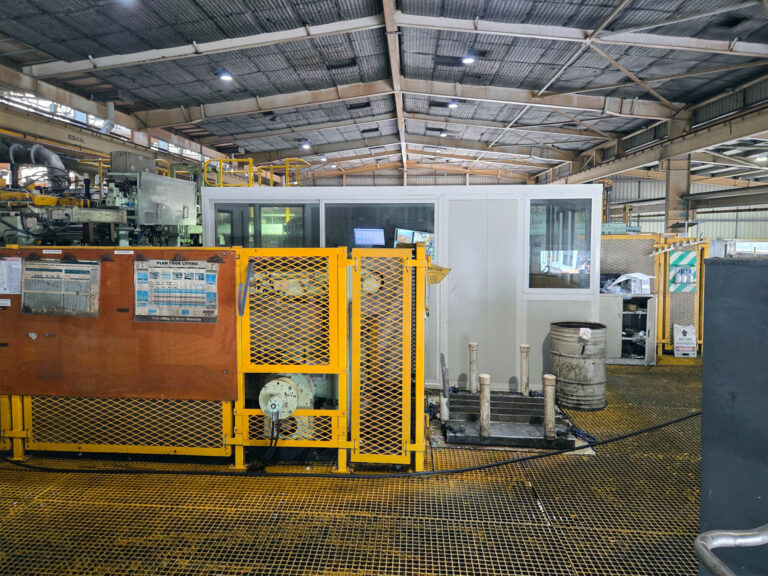
The infrastructure pipeline is growing. The approval pipeline is not.
There is more infrastructure in planning across Australia right now than at any point in the past twenty years. Defence, energy, resources, water, transport, and digital infrastructure are all in concurrent procurement or design. The… -
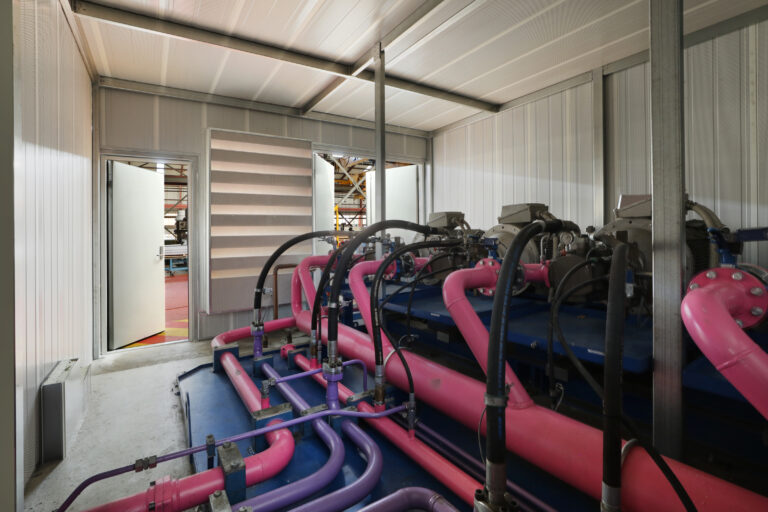
The next infrastructure bottleneck may not be power
The power conversation has dominated infrastructure planning for two years. Grid capacity, connection timelines, and energy procurement have become real programme constraints across the sector. Most of the attention in project feasibility is going to… -
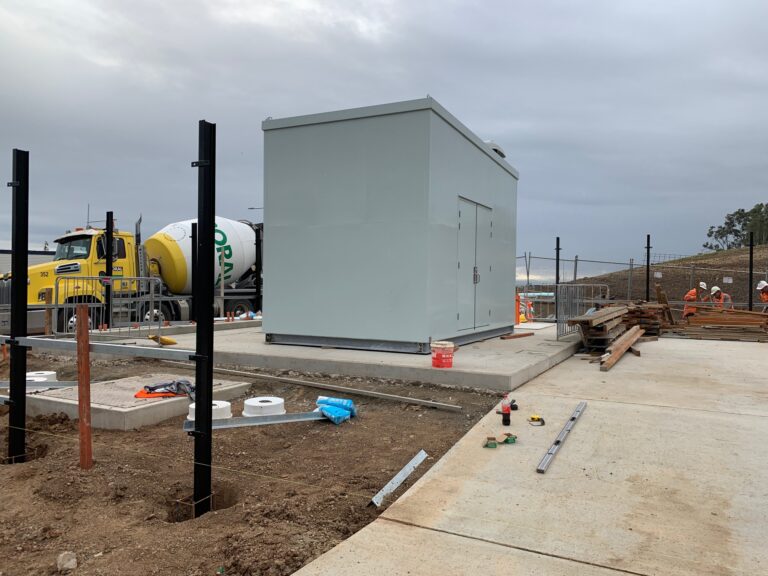
What energy and industrial facilities teach about acoustic treatment in harsh environments
Acoustic products installed in energy infrastructure and industrial facilities are subject to operating conditions that have no equivalent in commercial building applications. Coastal salt air, industrial chemical atmospheres, high UV exposure, mechanical impacts from maintenance…