Generator acoustic solutions to control sound in standby and prime power applications
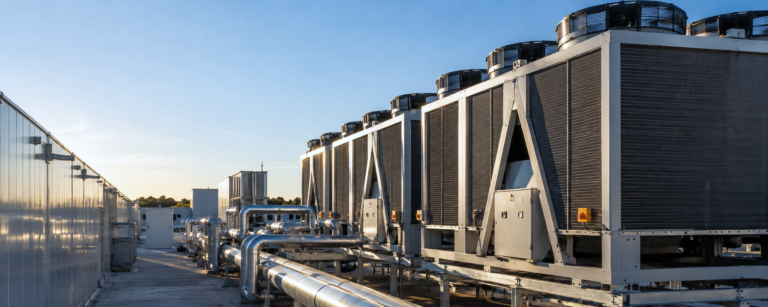
Balancing ventilation, performance and containment Generators present a unique acoustic challenge, with their complex mix of mechanical noise, combustion characteristics, and airflow requirements. AcousTech’s specialists understand how best to control generator noise. The sound profile of generators is often dominated by low-frequency energy and tonal components. These characteristics travel further and are more likely to…
Balancing ventilation, performance and containment
Generators present a unique acoustic challenge, with their complex mix of mechanical noise, combustion characteristics, and airflow requirements. AcousTech’s specialists understand how best to control generator noise.
The sound profile of generators is often dominated by low-frequency energy and tonal components. These characteristics travel further and are more likely to be perceived beyond site boundaries.
At the same time, generators require consistent airflow for cooling and operation. Any attempt to contain noise must work alongside these functional demands.
This is where many approaches fall short. Enclosures are added, but ventilation paths remain untreated. Doors are installed, but sealing is insufficient. The result is partial control, where sound simply redirects through the weakest point.
A more considered approach treats the enclosure as a system.
How we control generator noise
- Air intake and discharge paths are managed using Sonic Series acoustic louvres, allowing airflow while reducing breakout.
- Access points are addressed with Sonic Access acoustic doors, maintaining enclosure integrity during operation and servicing.
- Structural boundaries are formed or upgraded using Sonic System acoustic modular panels to reduce transmission and internal build-up.
Every element is engineered, drawing on Flexshield Group’s decades of experience in generator noise control. Together, these elements create a balanced condition where generator performance is maintained while sound is controlled.
This is particularly relevant in hospitals, commercial buildings and infrastructure sites, where standby systems operate close to occupied areas.
Talk to us about generator noise control for your facility
At AcousTech, we design noise control with these constraints in mind. We measure, test and apply our expertise to real operating conditions, with a commitment to protecting hearing.
To talk to the specialists at AcousTech, call 1300 508 232.
Trusted by engineers, built for performance.
The science of silence.
Related Stories
-

What project managers should look for beyond the noise report
An acoustic assessment submitted as part of a project’s design documentation is a technical document. It contains noise predictions, comparisons against applicable criteria, and mitigation recommendations. For acoustic engineers, it is a familiar format that… -

The cost of late-stage acoustic changes on Tier One projects
On many major construction projects, acoustic engineering is engaged early enough to satisfy planning approval, but not early enough to influence design. Equipment selections proceed under the assumption that acoustic compliance will be confirmed once… -

Designing acoustic infrastructure that can scale with future capacity
Most large data centre, industrial, and energy infrastructure projects are designed with staged expansion in mind. Site masterplans show future building footprints, additional mechanical plant bays, expanded cooling infrastructure, and increased electrical capacity. The capital…