Unpacking the long-term benefits of choosing more robust solutions
Noise is a known variable in industrial environments. What matters is how it’s managed.
In high-output facilities, the acoustic load can influence everything from operational flow and communication to worker fatigue and compliance outcomes. Managing it requires more than basic treatment. It calls for systems built to address complex sound paths with precision, and materials that maintain their acoustic integrity under real-world conditions.
Acoustic performance is measurable, and material choice matters
Noise control is not a one-size-fits-all task. It involves absorption, isolation, reflection control, and transmission loss. Each outcome relies on the right material properties, such as density, surface geometry, flow resistivity, and modularity.
Low-grade materials tend to underperform on key acoustic benchmarks:
- Low mass results in poor transmission loss (Rw values)
- Minimal absorption causes high reverberation times (RT60)
- Poor durability means materials degrade when exposed to moisture, vibration, or particulate matter
In contrast, high-performance acoustic materials are engineered to meet defined acoustic and mechanical specifications. Their results are predictable, reliable, and repeatable across applications.
The benefits of using engineered industrial noise control systems
Projects that specify fit-for-purpose acoustic systems gain several practical and operational advantages:
1) Reduced rework and faster commissioning
Correctly matched acoustic systems resolve the issue upfront. That means less on-site adjustment, fewer delays, and consistent acoustic outcomes without overengineering.
2) Verified acoustic performance
All AcousTech acoustic solutions are backed by independent test data, including Rw ratings, STL curves, and absorption coefficients, so design teams can model acoustic impact before installation.
3) Long service life
High-quality panels, louvres, and doors maintain their performance across exposure cycles, critical in environments with temperature fluctuation, chemical exposure, or continuous vibration.
4) Flexible installation and integration
Modular systems, like acoustic panels and curtain barriers, allow for staged installation, expansion, or relocation without performance loss.
Acoustic solutions designed for industrial environments
AcousTech designs and supplies advanced acoustic systems, developed by the Flexshield Group, that address airborne noise in manufacturing, energy, water, defence, and infrastructure projects. These include:
Sonic Access acoustic doors
Tested to achieve Rw ratings up to Rw46, these door systems feature high-density cores, full perimeter seals, and optional fire-rated skins. Suitable for mechanical plant rooms, switchboards, and generator housings.
Sonic Series acoustic louvres
Combining aerodynamic airflow with noise attenuation, these louvres provide insertion loss up to 30 dB depending on configuration. Designed for substations, chemical plants, and industrial HVAC systems.
Sonic System acoustic panels
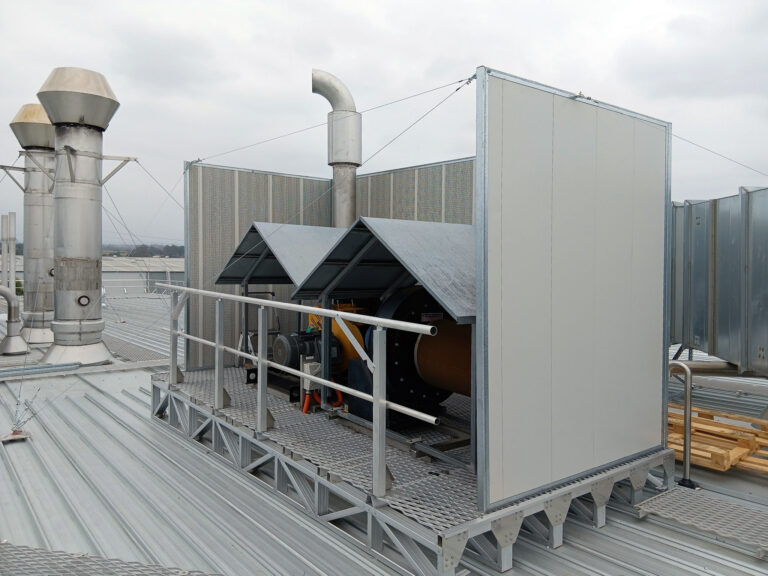
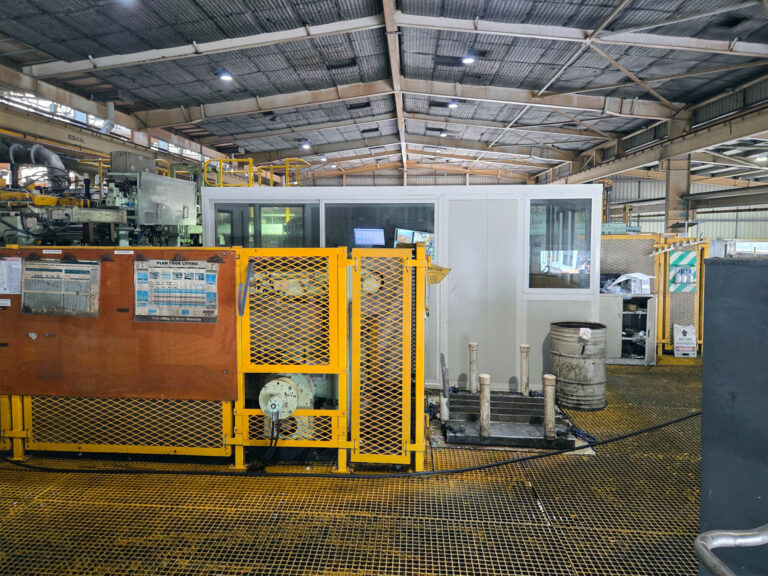
Prefabricated panels with modular framing and composite construction, offering high STC values with rapid installation. Common applications include equipment enclosures, internal partitions, and perimeter barriers.
Sonic Acoustic curtains
Flexible barrier-absorption panels with weighted cores, designed for high-noise areas that require spatial adaptability. These systems are ideal for temporary worksites, mobile plant areas, and retrofit scenarios.
The value of long-term acoustic performance
While upfront pricing is a common pressure point, the long-term benefits of using technically robust systems far outweigh the marginal savings of entry-level alternatives.
Correctly specified noise control reduces long-term maintenance, supports compliance with workplace and environmental regulations, and maintains its acoustic properties long after installation.
For specification support, acoustic data sheets, or system advice tailored to your site conditions, call AcousTech on 1300 508 232.
Trusted by engineers, built for performance. Powered by Flexshield.
That’s the Science of Silence.