
Variable-speed plant, designing for the operating condition nobody modelled
Variable-speed drives are now standard on HVAC fans, pumps and much of the plant they serve, yet the acoustic assessment often relies on one sound power figure for the nominal or maximum duty point. That’s reasonable for fixed-speed equipment. For variable-speed fans it can miss the operating point that sets the acoustic outcome, because speed…
Variable-speed drives are now standard on HVAC fans, pumps and much of the plant they serve, yet the acoustic assessment often relies on one sound power figure for the nominal or maximum duty point. That’s reasonable for fixed-speed equipment. For variable-speed fans it can miss the operating point that sets the acoustic outcome, because speed changes the noise as well as the airflow.
The blade-pass tone moves with speed
Fans and other rotating equipment commonly produce a tone at the blade-pass frequency, the number of blades multiplied by the rotational speed. On fixed-speed equipment it sits at one predictable frequency. On variable-speed equipment it shifts continuously as the drive follows load, so the tone moves across the spectrum.
A tone that sits in a band where the surrounding treatment performs well at one speed can shift into a band where the same treatment does less at another, with no change to the equipment itself.
A centrifugal fan with seven blades at 1000rpm produces a blade-pass tone at about 117Hz. The same fan at 600rpm, meeting a reduced load, produces it at 70Hz, a different frequency with different implications for duct resonances, room acoustics and any frequency-specific treatment. A single manufacturer’s test point, usually taken at or near maximum speed, describes only one of these conditions.
Variable-frequency drives add another layer. The drive’s switching frequency produces motor tones of its own, with sidebands that shift as the output speed changes, and a single nominal-condition test doesn’t capture them. A fan at 40% speed can have a different tonal character from the same fan at 100%.
Lower speed isn’t automatically quieter
A common assumption is that reducing fan speed reduces noise proportionally, which would make minimum speed the acoustically safest condition to design around alongside the maximum. That doesn’t reliably hold. Fan noise is closely linked to operating efficiency, and a fan running well away from its best efficiency point, which can happen at reduced speed depending on the system curve and duty point, can generate more tonal or turbulent noise than the same fan nearer peak efficiency at a higher speed.
Minimum speed is a poor stand-in for minimum noise. Treating it as the safe end of the range can leave a worse condition unassessed.
A sweeping tone can find a resonance
As a variable-speed fan changes speed, the blade-pass frequency and its harmonics sweep across a range of frequencies. Somewhere in the normal operating range that tone may coincide with a duct, plenum or structural resonance, even if it doesn’t at the nominal design speed. Where it does, the tone can be amplified well beyond what a straightforward sound power calculation predicts, producing a complaint or a compliance failure at a condition nobody checked during design.
The risk is specific to variable-speed plant. Fixed-speed plant either sits near a resonance or it doesn’t, and that doesn’t change once installed.
Finding it at design stage means checking the blade-pass frequency across the full speed range against the known or estimated natural frequencies of the ductwork, plenum and any enclosing structure. Where duct or plenum dimensions aren’t finalised until later, revisit the check once they are, since those natural frequencies depend on the installed geometry.
An air handling unit at part load
Take an air handling unit fan with a variable-frequency drive, serving a data centre or commercial building. It’s specified and acoustically assessed at maximum design speed, since that’s where airflow and sound power data are easiest to get from the manufacturer.
In normal operation the drive spends most of its time at reduced speed to match the building’s cooling load, and there the blade-pass tone sits at a different frequency. If that tone lands on a duct resonance, or at a frequency where the plant room construction gives comparatively little attenuation, the fan can be audibly tonal for most of its operating life while appearing compliant against the single maximum-speed figure. A commissioning measurement taken only at maximum speed, to match the design assessment, wouldn’t reveal it.
Assess the full operating range
An assessment built on one sound power figure, usually for the nominal or maximum duty point, covers one operating condition out of the range the equipment runs across in service. A fuller assessment reviews sound power and frequency content at minimum, typical and maximum speed, and checks whether the blade-pass frequency at each point falls near a known duct or structural resonance.
Where the manufacturer’s data covers only one point, identify the gap and either close it with more data or record it as a documented assumption in the acoustic model, the same way any other unverified input should be tracked through a project.
Size treatment for the whole frequency sweep
Because the tonal component of variable-speed plant can migrate across a range of frequencies, treatment sized against one band may not perform across the full operating range. We specify our Sonic acoustic attenuators against the frequency-band sound power data of the source they treat, and for variable-speed plant that means the range of frequencies the source can produce, not one nominal condition.
Where a fan or pump is ducted, assess the attenuators in the duct run, and the Sonic Series acoustic louvres at plant room intake and discharge openings, against the full sweep of the blade-pass frequency and its harmonics across the operating range.
Treat speed as an acoustic input
For variable-speed plant, operating speed changes the frequency and character of the noise, so the assessment has to cover the full operating range. Assuming maximum speed is always the worst case, or minimum speed always the quietest, can leave the real worst condition untreated until it shows up as a complaint or a failed commissioning measurement.
Related Stories
-
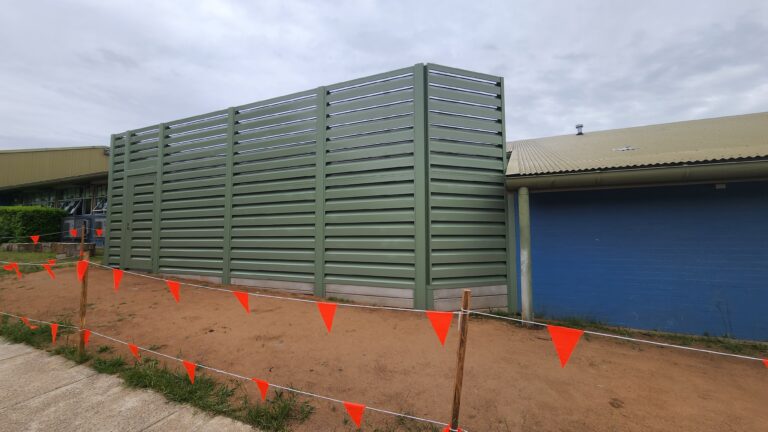
Low-frequency industrial noise, why distance and barriers do not always behave as expected
Noise mitigation is often planned around a single dB(A) figure, on the assumption that a barrier of a given height or a set standoff distance will deliver a broadly predictable reduction. For low-frequency industrial noise… -
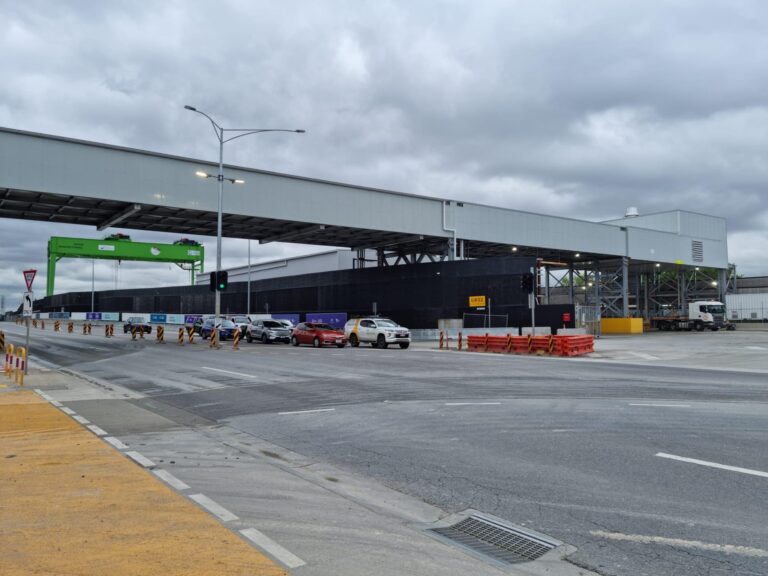
From model to commissioning, closing the acoustic performance gap
An acoustic model produced at the design stage of an infrastructure project is only as reliable as its assumptions, and those assumptions have to survive procurement, fabrication, installation and every change in between. Acoustic commissioning… -
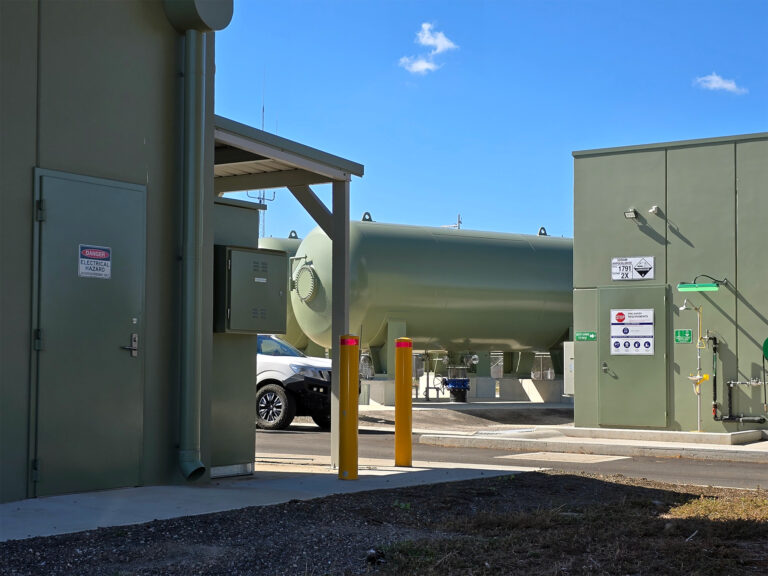
What NATA-accredited acoustic data tells a specifier and what it does not
A NATA-accredited test report is one of the strongest pieces of evidence in acoustic testing and specification, and one of the most often misread. Accreditation confirms something specific about the laboratory that produced the result….