
Emergency generators, the short-duration noise source that can dominate a data centre assessment
A common position in early data centre planning runs roughly as follows. The generators are for emergencies. They will run perhaps twenty hours a year. Continuous mechanical plant is the real assessment problem, and the generators can be handled with a note. The annual hours are usually accurate. The conclusion drawn from them is frequently…
A common position in early data centre planning runs roughly as follows. The generators are for emergencies. They will run perhaps twenty hours a year. Continuous mechanical plant is the real assessment problem, and the generators can be handled with a note.
The annual hours are usually accurate. The conclusion drawn from them is frequently wrong, and the reason is that almost none of the assessment frameworks that apply in Australia measure significance in annual hours.
The operating regime is not one thing
The first substitution that causes trouble is treating standby generator operation as a single category.
Genuine emergency operation is rare, unplanned and, in most frameworks, treated differently from everything else.
Routine exercise runs are neither rare nor unplanned. Most data centre operating regimes run each set on a scheduled cycle, typically weekly or monthly, for a defined period. These are foreseeable, repeated, and they occur at times chosen by the operator.
Maintenance runs accompany servicing and can be longer than exercise runs.
Commissioning testing is the most demanding period the installation will ever see. Sets are run individually and together, at load, sometimes for extended periods, and frequently outside normal hours because the facility is not yet live.
Load bank testing puts sets at or near full rated output for extended durations, and is repeated periodically through the life of the facility. It is usually the loudest and the longest condition, and it is the one most often absent from the assessment because it is not thought of as operation.
Those five regimes have different durations, different times of day, different load points and therefore different sound power levels. Assessing them as one category means assessing none of them.
The metric decides whether duration matters at all
This is where the annual hours argument fails on the arithmetic.
Consider a set producing 55 dB(A) at a residential receiver while running, tested for thirty minutes.
Assessed as an equivalent continuous level over a fifteen minute interval, the result is 55 dB(A). The event fills the assessment period completely, so its duration provides no reduction whatsoever.
Assessed as an equivalent continuous level over a nine hour night period, the same event gives 55 plus ten times the logarithm of the ratio of half an hour to nine hours, which is 55 minus about 12.6, or roughly 42 dB(A).
Same source, same duration, same receiver, twelve and a half decibels apart. The difference is entirely in the averaging period the assessment framework specifies.
The NSW Noise Policy for Industry sets its intrusiveness criterion as an equivalent continuous level over fifteen minutes, expressed as the rating background level plus 5 dB. Against a fifteen minute metric, a thirty minute test run receives no duration credit at all. Where a project instead carries a long period amenity criterion, duration does reduce the assessed level, but the two criteria apply simultaneously and the more onerous one governs.
There is also a separate question that duration cannot help with at all. Engine start is an abrupt event with a high maximum level, and sleep disturbance screening is assessed against maximum levels rather than equivalent continuous levels. A short event and a loud maximum are the same thing.
Australian jurisdictions do not treat this identically
Practitioners moving between states should not carry an assumption about emergency plant across a border.
The Victorian framework distinguishes the two cases explicitly. EPA Victoria guidance states that noise from equipment used in relation to an emergency is not taken into account, while making clear that the prescribed noise limits do apply to the testing and maintenance of emergency equipment, as set out in the noise protocol. The exclusion attaches to the emergency, not to the equipment.
The NSW Noise Policy for Industry takes a different structural approach. Its scope section lists the activities the policy does not cover, and emergency operation of standby plant is not among the listed exclusions. In practice the treatment of testing and emergency operation is generally resolved through the conditions of consent for the development rather than through a blanket policy carve out, which means the position is project specific and is set during assessment.
The practical consequence for a project team is that the applicable framework, and any project specific conditions, should be confirmed before the test regime is designed, because the test regime is one of the few things still genuinely adjustable at that stage.
What actually makes generators govern the assessment
Four characteristics push standby plant to the top of the assessment, and none of them are related to how often it runs.
The source level is high. A large diesel set at load produces a sound power level far above the continuously operating mechanical plant on the same site, so the margin available for propagation losses is much smaller.
The spectrum is low frequency and tonal. Engine firing frequency and its harmonics produce discrete tones. For a four stroke engine the firing frequency in hertz is the shaft speed in revolutions per second multiplied by half the number of cylinders, so a sixteen cylinder set at 1500 rpm gives 200 Hz, with the engine rotational frequency at 25 Hz and half order content below it. Low frequency energy propagates further, is attenuated less by barriers and building fabric, and is the content that enclosures, louvres and facades treat least efficiently.
Most Australian frameworks then apply an adjustment where the source has annoying characteristics. The NSW policy directs that corrections for tonality, low frequency content, impulsiveness and intermittency be applied to predicted levels before comparison with the criterion. A generator can attract more than one of those.
Timing works against the source. Exercise runs are often scheduled outside business hours to avoid interfering with facility operations, which places them in the evening or night assessment period where the criterion is most stringent and where sleep disturbance screening applies.
And the plant is not singular. Redundant configurations mean several sets, and black start or full facility testing can run them simultaneously. Ten identical sets operating together produce a level ten decibels above one of them, which is enough to convert a compliant single set assessment into a non compliant site assessment. The mechanism is set out in our article on cumulative noise impacts in clustered installations.
Designing the assessment around the regime
An assessment that holds up through commissioning generally addresses the scenarios separately rather than assessing a nominal operating case.
|
Scenario |
What governs it |
|
Single set routine exercise |
Short period equivalent level, time of day, tonality adjustment |
|
Multiple set simultaneous test |
Logarithmic addition across sets, cumulative site criterion |
|
Load bank testing at full output |
Highest sound power, extended duration, often periodic |
|
Commissioning programme |
Duration and hours, frequently outside normal periods |
|
Engine start transient |
Maximum level, sleep disturbance screening |
|
Genuine emergency operation |
Jurisdictional treatment, conditions of consent |
Where the assessment shows a shortfall, the useful part of the discussion is which scenario produced it, because the mitigation differs. A shortfall driven by the simultaneous test case may be resolved by a staggered test regime rather than by hardware. A shortfall driven by the single set exercise run cannot.
Where treatment sits
Physical mitigation for standby plant follows the same logic as any high level low frequency source, and the openings decide the result.
A Sonic acoustic enclosure, assembled from Sonic System acoustic modular panels with laboratory test ratings behind them, sets the ceiling for the wall construction. Sonic Series acoustic louvres and Sonic acoustic attenuators in the intake and discharge paths decide whether that ceiling is ever approached, and their sizing is constrained by the engine’s allowable external restriction rather than by the acoustic target. Sonic Access acoustic doors maintain the boundary at the access points, provided they are closed when the set runs, which is a commissioning and operations question as much as a specification one.
Exhaust noise is treated separately, in line, within the engine manufacturer’s allowable backpressure. The design detail behind all of this is covered in our article on generator intake and discharge paths.
All of this hardware is easier and cheaper to accommodate when the generator yard is being laid out than when the assessment is being closed out.
Low annual operating hours are a genuine fact about standby generators and a poor predictor of how they will be assessed.
Significance is decided by the averaging period the framework specifies, the time of day the plant is exercised, the spectral character of the source, the adjustments that character attracts, the number of sets that can run together, and how the applicable jurisdiction treats testing as distinct from emergency use. Duration enters that list once, and only under some metrics.
The corollary matters as much. Infrequent operation does not remove the need for assessment, and it equally does not mean a standby set must be designed to the same criterion as continuously operating mechanical plant. Both of those shortcuts produce the wrong answer. The defensible position is to assess each operating regime against the criterion that actually applies to it, and to design the test regime with the same care as the hardware.
Related Stories
-
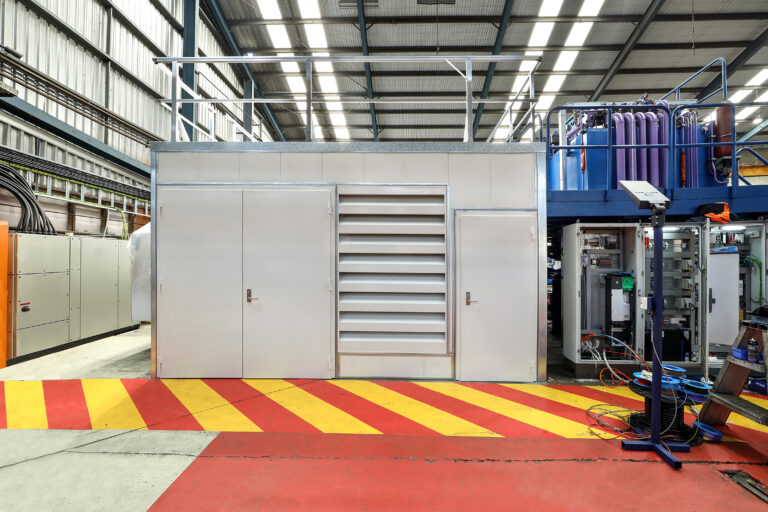
Designing generator intake and discharge paths without creating an acoustic weak point
A generator enclosure is an unusual acoustic object. Almost every other enclosure on a project is trying to be closed. This one has to move an enormous volume of air through itself continuously while the… -
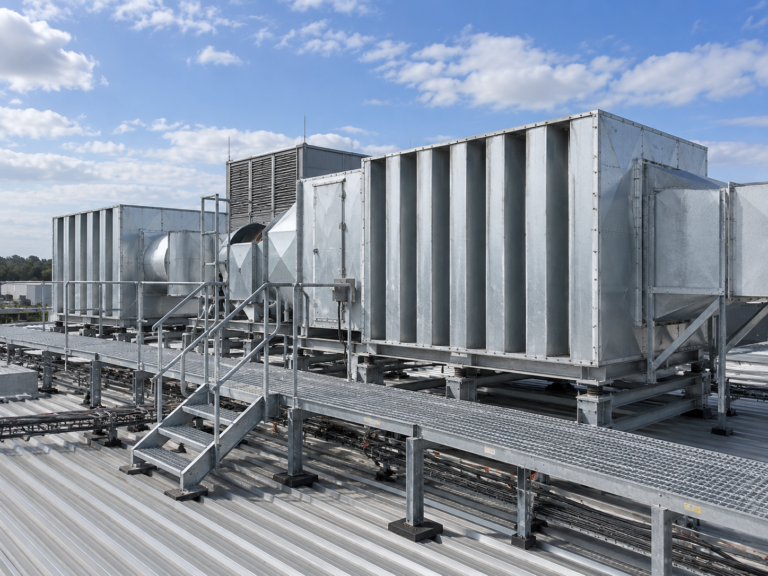
Attenuator sizing, balancing insertion loss, airflow and pressure drop
An attenuator selection sheet usually contains two numbers that people look at and one that decides whether the selection works. The two are insertion loss and pressure loss. The one is airway velocity, and it… -
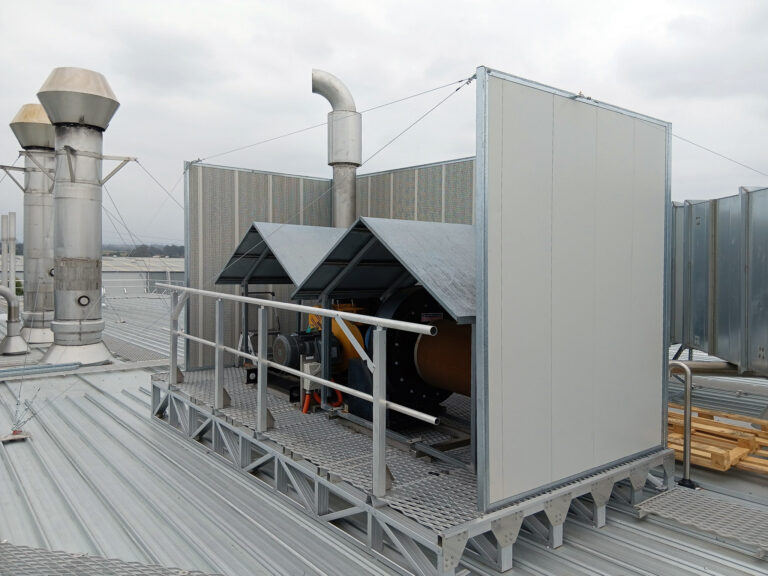
When an acoustic louvre is the right choice and when it is not
An acoustic louvre is asked to do three incompatible things through the same aperture. It has to let air through, keep water out, and attenuate sound. Each of those improves at the expense of the…