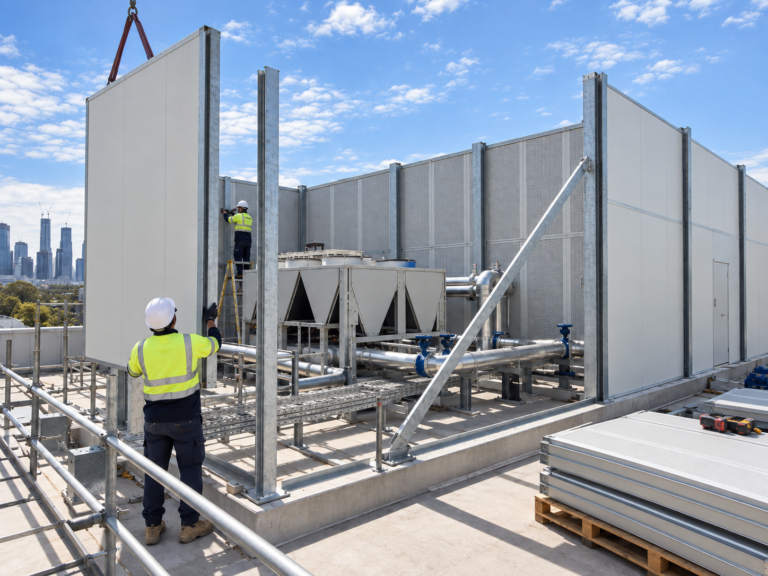
The complexity of major infrastructure projects has shifted. The technical problems are not getting harder. The interface problems are. More contractors, more packages, more design consultants, and more independent scopes operating in the same space have made interface management one of the primary delivery risks on large builds.
On a major project ten years ago, the acoustic scope was typically held by one contractor. The acoustic consultant, the builder, and the acoustic product supplier worked through one channel. Scope clarity was manageable. Today that is often not how large projects are structured. The acoustic scope gets split across packages, across contractors, and across interfaces that the project structure does not always define clearly.
Where acoustic doors create interface problems
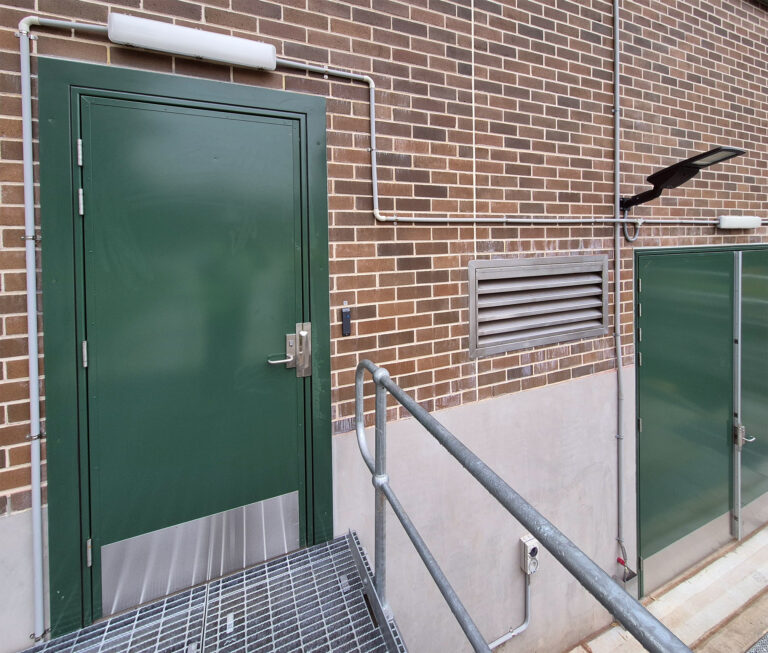
Acoustic doors are a clear example of where interface management breaks down. A Sonic Access acoustic door is a precision-assembled product. It performs to its rated acoustic attenuation because the door, the frame, and the seals work together as a single system. The performance is not a property of the door leaf alone. It depends on the frame being installed to the correct tolerances, the seals being fitted correctly, and the door being hung so it operates without deflection.
On a major project, the door may be procured by the main contractor, installed by a subcontractor, framed by a separate trade, and finished by a third. No single party has visibility of all the requirements at once. The result is that doors get installed into frames that do not meet the tolerances required for the acoustic seals to work. Or frames get installed first, the door arrives later, and the gap dimensions do not match. Or the door is hung correctly but the floor finish changes the clearance at the bottom seal.
Each of these problems is avoidable. None of them are complicated. They all require someone to manage the interface between the trades, between the specifications, and between the programme sequences.
Tolerances and acoustic performance
The acoustic performance of a rated door assembly depends on tolerances that most builders understand conceptually but do not always enforce in practice. The frame needs to be plumb, level, and square within the tolerances the manufacturer specifies. The reveal dimensions need to match the door specifications. The threshold detail needs to account for the floor finish.
When these tolerances are not met, the seals do not perform as tested. A Sonic Access door specified to Rw 46dB single leaf or Rw 45dB double leaf will not deliver that performance if the seals are not closing correctly. The rated performance is a property of the correctly installed assembly, not the door in isolation.
This is not a product problem. It is an installation management problem. The answer is coordination between the acoustic consultant, the door supplier, the framing contractor, and the builder before installation begins. That coordination needs to happen at design stage and at the pre-installation stage, not during defects.
Programming acoustic doors on a major project
Door installation sequence matters more than most project programmes reflect. Acoustic doors need to be installed after the building structure is stable and before the finishes are complete. They cannot be installed into frames that are still moving. They need to be protected from site damage after installation and before practical completion.
On a compressed programme, doors are often installed and then subjected to construction traffic, plant movement through doorways, and trades working in adjacent areas. The seals get damaged. The frame gets knocked. The performance that was there on installation day is not necessarily there on handover day.
Managing this requires clear scope definition in the construction programme, protection requirements written into the installation specification, and a defects check that tests the acoustic performance of the door assembly, not just its appearance.
What good interface management looks like
The projects that are handling acoustic doors well on major programmes have a few things in common. The acoustic consultant is involved in the review of shop drawings before fabrication. The door supplier is engaged in pre-installation briefings with the framing contractor. The installation tolerances are written into the specification package, not just referenced to a manufacturer’s guide. And there is a post-installation check that confirms the door is operating and sealing correctly before the area is handed over.
None of that is unusual. It is standard practice on well-managed projects. The gap is in the middle, on projects where the interface between packages is not managed actively, and where each trade completes its scope without checking whether it has created a problem for the next one.
Major projects will keep getting more complex. The interface management discipline needs to keep pace with it.