
The new acoustic challenge of hyperscale data centres
The acoustic profile of a hyperscale data centre bears little resemblance to the industrial facilities that informed the noise control frameworks most engineers have historically applied to large-scale mechanical plant. The combination of high-density cooling loads, variable-speed equipment operating continuously at scale, and 24/7 operational requirements creates a noise environment that demands a different analytical…
The acoustic profile of a hyperscale data centre bears little resemblance to the industrial facilities that informed the noise control frameworks most engineers have historically applied to large-scale mechanical plant. The combination of high-density cooling loads, variable-speed equipment operating continuously at scale, and 24/7 operational requirements creates a noise environment that demands a different analytical approach from the outset of design.
AI-driven compute demand is accelerating the scale of individual facilities. Where conventional data centres were characterised by relatively modest mechanical plant distributed across a campus, hyperscale facilities concentrate cooling loads that can reach hundreds of megawatts of heat rejection on a single site. The equipment needed to manage that load, including large dry coolers, cooling towers, chillers, air handling systems, and associated fans, creates acoustic demands that frequently require project-specific engineering rather than standardised treatment products. The rapid growth in AI computing has accelerated both cooling density and acoustic complexity within hyperscale facilities.
Tonal noise content, operational continuity, and proximity to sensitive receivers combine with scale to make hyperscale data centre acoustics a distinctive problem.
Cooling load and mechanical plant density
Conventional industrial facilities typically operate from defined shift patterns, with peak mechanical load occurring during production hours and periods of reduced operation overnight. Hyperscale data centres do not share this profile. Cooling systems operate continuously at loads that vary relatively little between day and night. The mechanical plant is dense, with multiple large fan arrays, compressors, and pumping systems running simultaneously across a site that may cover tens of thousands of square metres.
The cumulative effect of multiple simultaneously operating sources at close spacing creates a near-continuous noise field across the site boundary. Individual sources may each fall within acceptable limits when assessed in isolation. When combined with spatial proximity to receivers and continuous 24/7 operation, the cumulative impact on community amenity can exceed what single-source assessments suggest.
Large dry coolers and cooling towers commonly exhibit sound power levels in the 85 to 105dB range, depending on size, fan arrangement, and operating duty. Large fan arrays on heat rejection plant typically generate elevated low-frequency noise, particularly within the 63 Hz and 125 Hz octave bands. Managing this load within planning criteria established for less intensive industrial uses requires attenuation measures that must be designed from first principles rather than selected from standard product ranges.
Tonal noise and the variable-speed problem
The transition to electronically commutated fans and variable-speed drives across the HVAC industry has introduced tonal noise profiles that were less prevalent in older equipment. Where traditional fixed-speed fans produced broadband noise with relatively predictable octave-band distributions, variable-speed equipment generates tonal components whose frequency shifts with operating speed. This creates a target that is difficult to attenuate with passive acoustic measures sized to a fixed frequency.
Environmental noise criteria in Australia and internationally may apply a 5dB tonal adjustment where identifiable tonal characteristics are present. In practice, this means a cooling system that would otherwise comply with an applicable criterion at a given receiver can be assessed as non-compliant once a tonal component is factored into the evaluation. For hyperscale facilities where multiple variable-speed fan arrays operate simultaneously, tonal characteristics are frequently identified during operational assessments.
Acoustic attenuators and louvres sized to address broadband noise may provide limited attenuation at the specific tonal frequencies generated by a given fan configuration. Tonal noise mitigation requires early identification of likely tonal frequencies based on confirmed equipment selections, followed by acoustic treatment designed to address those frequencies specifically. This cannot be achieved through post-installation specification of standard products.
Planning risk in peri-urban locations
Hyperscale data centre development is increasingly occurring in peri-urban locations where land tenure and power infrastructure align with development requirements, but where residential receivers are within several hundred metres. Planning authorities in these locations are applying noise conditions that reflect community amenity expectations rather than the industrial land-use assumptions that informed older noise guidelines.
Many data centre developments encounter the situation where planning consent is granted on the basis of acoustic modelling that predicts compliant outcomes at surrounding receivers, but where the operating facility generates noise levels that produce community concerns not anticipated in the assessment. The gap between modelling predictions and community experience often arises from conservative assumptions about source levels, the absence of tonal components in the modelling input data, or failure to account for all operating scenarios.
For project developers and acoustic consultants, the implication is that planning compliance and community acceptance are related but distinct goals. A facility that achieves its consent conditions on paper may still generate the community concerns and regulatory attention that result in operational restrictions or upgrade requirements. Managing this risk requires acoustic criteria that reflect community expectations rather than minimum consent conditions.
Managing acoustic risk from the design stage
Acoustic risk on hyperscale projects is most productively managed during the design stage, when equipment selections, plantroom configurations, and site layouts are still variable. Once equipment has been ordered and structural configurations fixed, the options available to address acoustic shortfalls narrow considerably, and the cost of implementing changes rises considerably.
Design-stage acoustic management for hyperscale facilities requires confirmed sound power data from equipment suppliers at the time of selection, not after purchase orders are placed. It requires acoustic modelling that accounts for the full array of simultaneously operating sources across all planned operating scenarios, including part-load conditions at which tonal content may be more pronounced. And it requires acoustic treatment to be integrated into the mechanical and structural design rather than added as a peripheral specification item.
Acoustic louvres on air intake and discharge openings, attenuators on forced-ventilation pathways, and barrier treatment for high-intensity plant all contribute to the noise budget management of a hyperscale facility. The allocation of treatment between these elements, and the performance specifications applied to each, should be determined by octave-band source contribution analysis for the specific site geometry and receiver distribution. AcousTech’s experience in data centre acoustics and its range of Sonic Series acoustic louvres and Sonic acoustic attenuators are regularly applied in this context, with product selection driven by octave-band performance requirements rather than overall dB targets.
What this means for hyperscale projects
The growth in hyperscale data centre development in Australia is creating acoustic engineering demands that are at the leading edge of what current noise control practice can reliably address within typical planning constraints. Facilities that were designed and approved under acoustic frameworks developed for less intensive industrial uses are now operating in ways that expose the limitations of those frameworks.
Acoustic engineers working on hyperscale projects need to approach the noise control challenge as a system design problem rather than a product specification exercise. The scale of mechanical plant, the tonal characteristics of modern equipment, and the continuous operational profile of these facilities require analytical rigour and a treatment approach that reflects the specific demands of the facility type.
Acoustic engineering integrated from the earliest design stages costs a fraction of what remediation costs after commissioning. The window for project-specific treatment design is the period before equipment is ordered, not after it arrives on site.
Talk to the AcousTech team about your project.
Related Stories
-
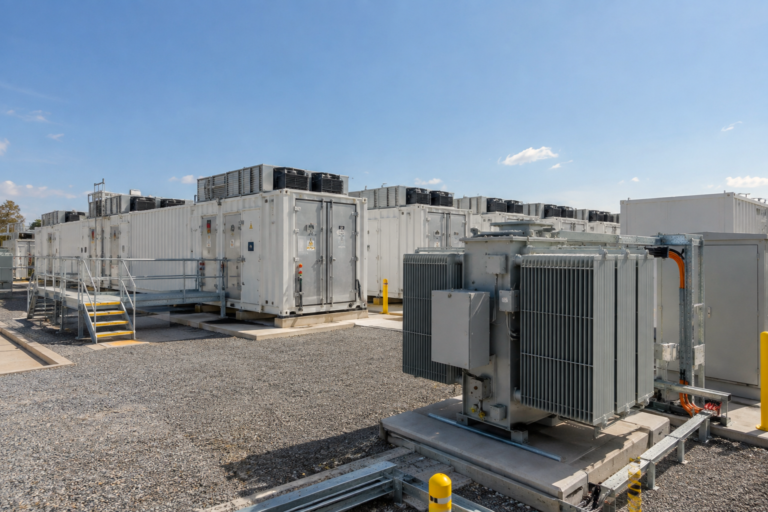
BESS noise 101, fans, chillers, inverters and transformers explained
Battery energy storage is often described as quiet technology, and at the cell level that is true. There is no combustion, no reciprocating machinery and no prime mover. Everything around the cells is a different… -
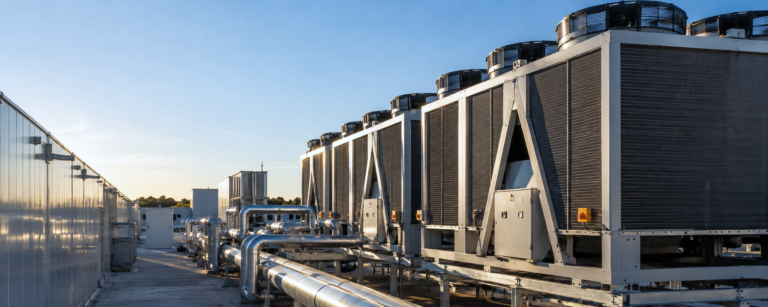
Data centre noise 101 for project teams, where the noise actually comes from
Most data centre noise summaries are written as a list of equipment. Chillers, cooling towers, fans, transformers, generators. The list is accurate and not especially useful, because it does not tell a project team which… -
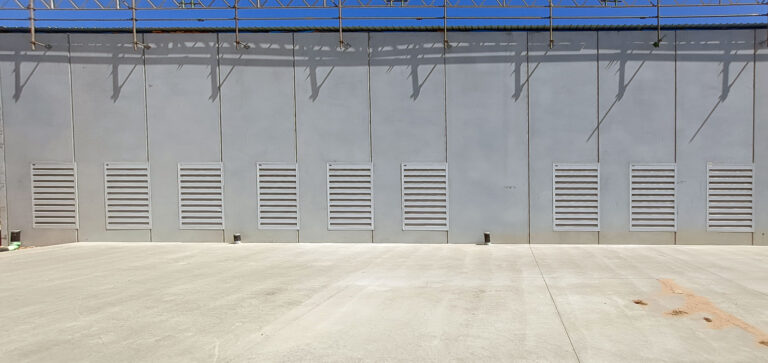
Noise risk and community acceptance in BESS project design
Battery energy storage systems are one of the fastest-growing infrastructure categories in Australia. As installations increase in scale and move closer to residential and rural communities, acoustic performance is becoming a design consideration that project…