Key considerations before specifications are locked in
At the specification stage, clarity matters. It’s not just whether acoustic control is needed, but how each component shapes the outcome without compromising mechanical performance.
What are the best products for HVAC noise control?
For HVAC plant serving data centres and BESS installations, three noise control product types consistently define results:
1) Sonic Series acoustic louvres
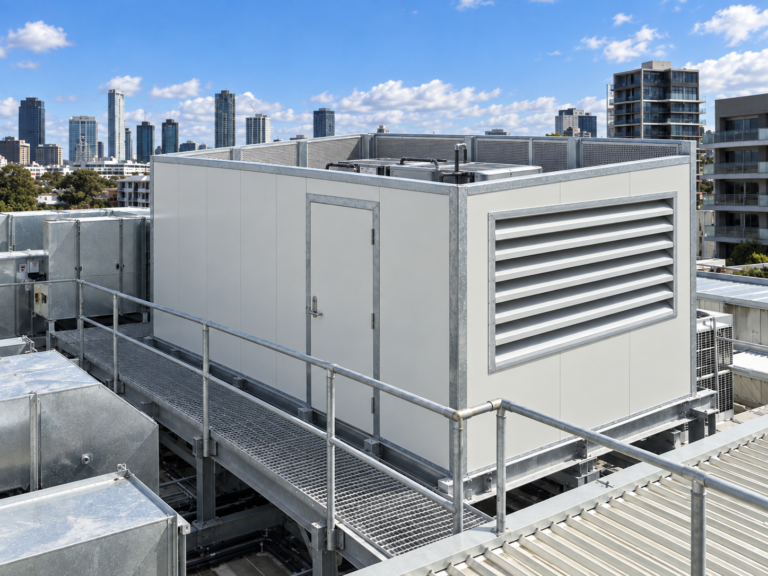
Used where air enters and exits. Selection depends on attenuation targets and allowable pressure drop. Blade depth and configuration determine how sound is reduced across frequency ranges. The acoustic louvre for HVAC, when specified correctly, is essential for HVAC noise reduction at key air movement points.
2) Sonic Access acoustic doors
Installed at access points where containment must be maintained. Suitable for plant rooms and service areas where durability and sealing performance are essential.
3) Sonic System acoustic modular panels
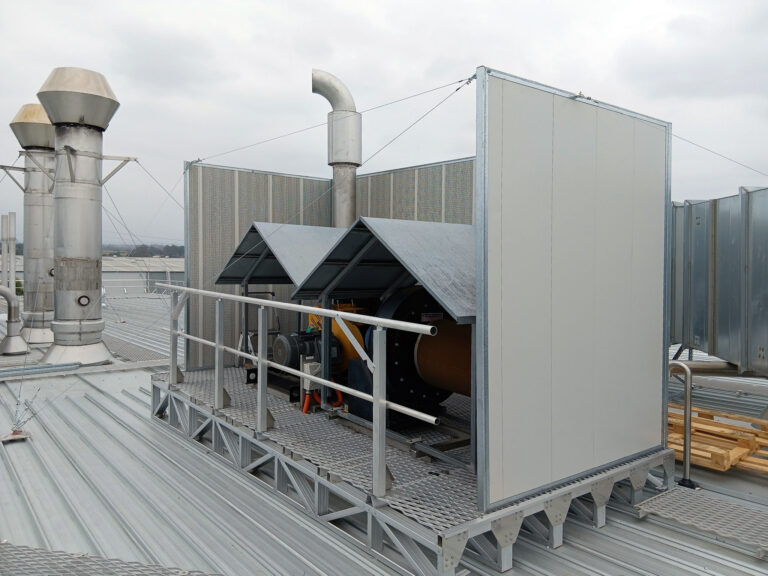
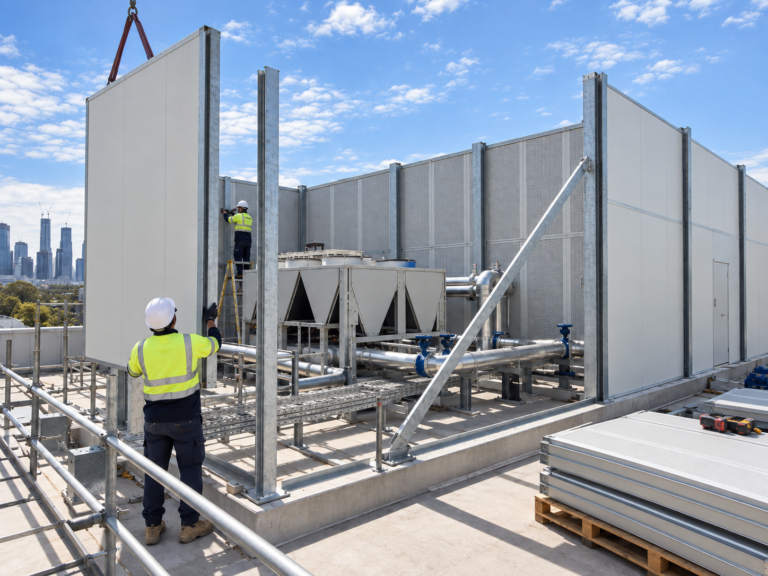
Applied to enclosures and linings as HVAC acoustic screen walls. Particularly useful where flexibility and installation efficiency are required, including retrofit conditions.
These modular panels can be integrated with acoustic louvres for HVAC for optimum noise control.
Creating integrated HVAC noise control
What differentiates a reliable outcome is how these noise control elements integrate.
Connections between louvres and panels, door sealing interfaces, and installation tolerances all influence final performance. And even small gaps can alter results.
Documented testing, modelling and clear specification language help remove uncertainty. They provide a reference point that extends beyond design intent into constructed reality.
Talk to us about custom HVAC noise control
At AcousTech, we back every decision with data and practical application. The goal is not just compliance, but long-term consistency.
To talk to the specialists at AcousTech, call 1300 508 232.
Trusted by engineers, built for performance.
The science of silence.