Why frequency data defines industrial noise control outcomes
Low-frequency noise is one of the most challenging aspects of industrial acoustic control. Its energy behaves differently from mid- and high-frequency sound, and it often travels further, penetrates barriers more easily, and affects people in ways that are not immediately obvious. That’s why understanding and managing low-frequency energy requires careful measurement and informed design decisions.
Low-frequency acoustic performance metrics provide the clarity needed to identify problems, design targeted interventions, and deliver predictable results in complex industrial environments.
Why does low-frequency noise behave differently?
Unlike higher-frequency sound, low-frequency noise has long wavelengths that interact uniquely with structures and spaces. It can pass through walls, floors, and ceilings more easily, reflect over long distances, and combine to produce tonal or boom-like effects.
This behaviour means that conventional acoustic solutions, or assumptions based solely on overall decibel levels, often fall short. Controlling low-frequency noise requires a detailed understanding of how sound energy propagates in the real environment.
The limits of single-number ratings
While single-number ratings, such as overall LAeq or NRC values, provide a convenient summary of noise levels or absorption, they do not reveal frequency-specific behaviour.
For example, a panel that performs well at mid-range frequencies may offer limited reduction at low frequencies. If a plant relies solely on overall metrics, tonal problems from compressors, fans, or pumps may go unaddressed, leading to complaints, compliance risks, or operational disruption.
Low-frequency acoustic performance metrics reveal these gaps, allowing designers to identify which frequencies dominate the environment and require targeted control.
How octave band data shapes enclosure and barrier design
Octave-band analysis divides sound into frequency bands, providing a detailed picture of how energy is distributed across the spectrum. This information is essential for designing acoustic enclosures, barriers, and absorption systems that perform effectively at low frequencies.
For instance:
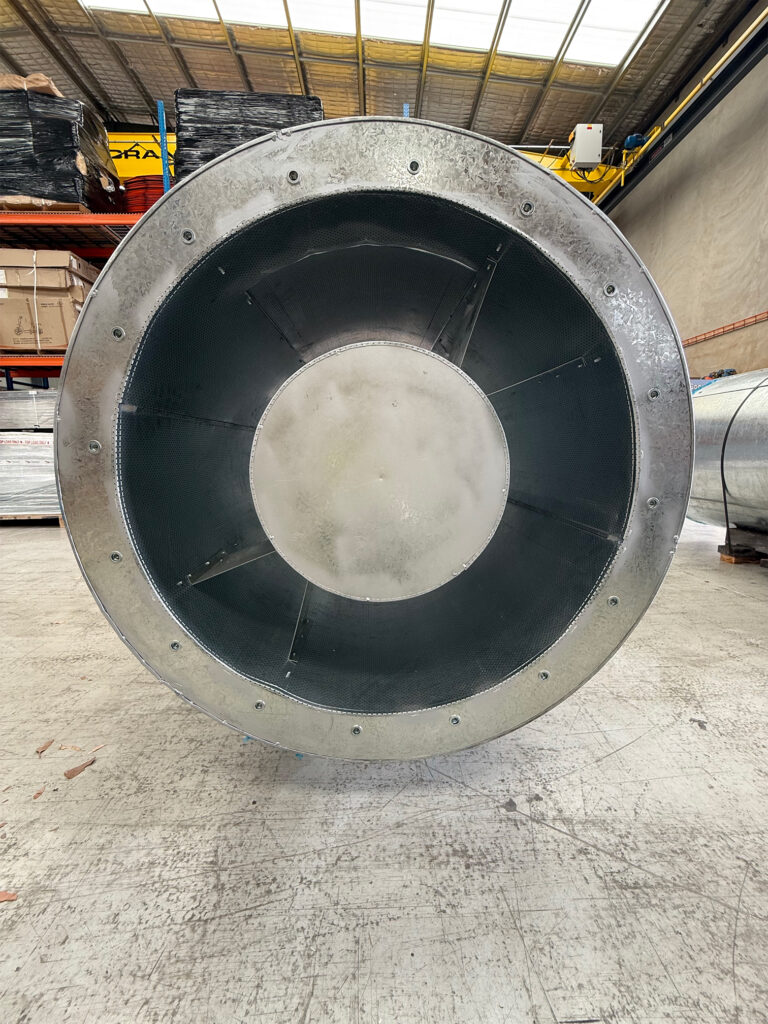
- Barriers can be tuned in mass and density to block dominant low-frequency energy
- Absorptive panels can be positioned and selected based on where reflections create resonance
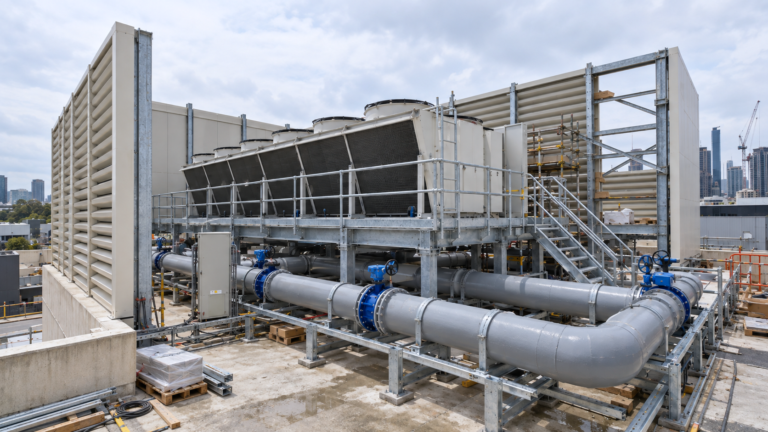
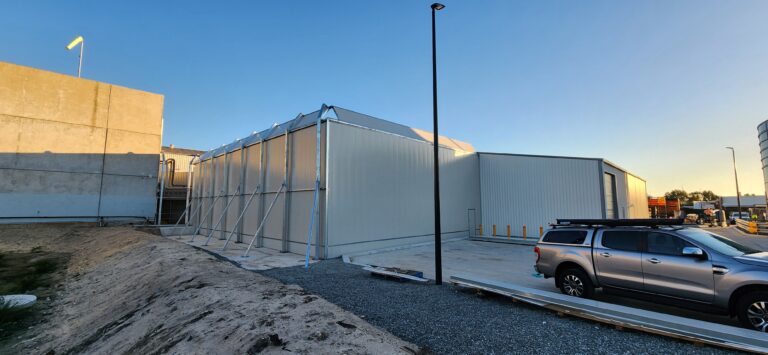
- Enclosures can be designed to minimise structure-borne transmission while maintaining operational access
When designed with octave band data, acoustic systems are not generic; they are precise, predictable, and tailored to the facility’s unique acoustic profile.
Real-world industrial examples of low-frequency noise
In industrial settings, low-frequency issues often come from heavy machinery, ventilation systems, or rotating equipment. Measurements may show that a small number of sources dominate the acoustic signature, even when the overall noise level seems acceptable.
Targeted interventions informed by low-frequency acoustic performance metrics allow these dominant sources to be managed first. By addressing the most influential contributors, projects achieve significant noise control improvements with minimal disruption, while regulators, operators, and neighbours see measurable results.
Turning acoustic metrics into predictable outcomes
Low-frequency noise no longer needs to be unpredictable. By relying on detailed frequency data rather than simplified averages, engineers and project teams can make confident, data-driven decisions.
This approach ensures that industrial environments meet regulatory expectations, protect workers, and maintain operational efficiency. It also reinforces AcousTech’s philosophy: sound can be measured, understood, and controlled when the right metrics are applied.
To talk to the specialists at AcousTech, call 1300 508 232.
Trusted by engineers, built for performance.
That’s the Science of Silence.