Key points to consider when you’re designing for silence
The process of creating a quiet workplace begins long before noise control installation. The early concept phase is where acoustic performance metrics carry the most value, yet they are often treated as verification rather than design tools.
When acoustic performance metrics are considered from the start, they can guide better choices, helping to prevent later redesign and allowing projects to move with greater clarity.
Bringing acoustic thinking into concept design
Early design focuses on layout, material selection, and performance targets. Introducing IL, TL, and NR at this stage allows engineers to plan with intent rather than correction.
During the early design phase:
• IL informs decisions about ducts, silencers, and airflow paths
• TL guides material choices for separating spaces
• NR provides a preview of how people will experience the environment once operational
Selecting the right metric at the right stage prevents assumptions that often lead to performance gaps. It’s also the approach we take with all Flexshield Group projects, where material behaviour, structural paths, and installation intent are considered together.
Early risk identification
Identifying acoustic risks before drawings progress is essential. These risks often relate to flanking paths, framing interactions, or room absorption. By mapping these elements early, teams avoid the need for reactive fixes later.
AcousTech engineers use preliminary models to explore how mass, stiffness, and geometry influence IL, TL, and NR. This early-stage investigation allows the Science of Silence to guide design decisions before costs escalate.
Workflows that support accurate outcomes
Modern modelling tools allow teams to test pathways, trial materials, and predict NR across different configurations. This structured workflow replaces guesswork with data-driven insights.
A common AcousTech workflow starts with TL targets, followed by checks for flanking paths. IL is then assessed where airflow devices or duct paths are involved. Each step ensures that materials, geometry, and installation work together to achieve intended performance.
Case style insights
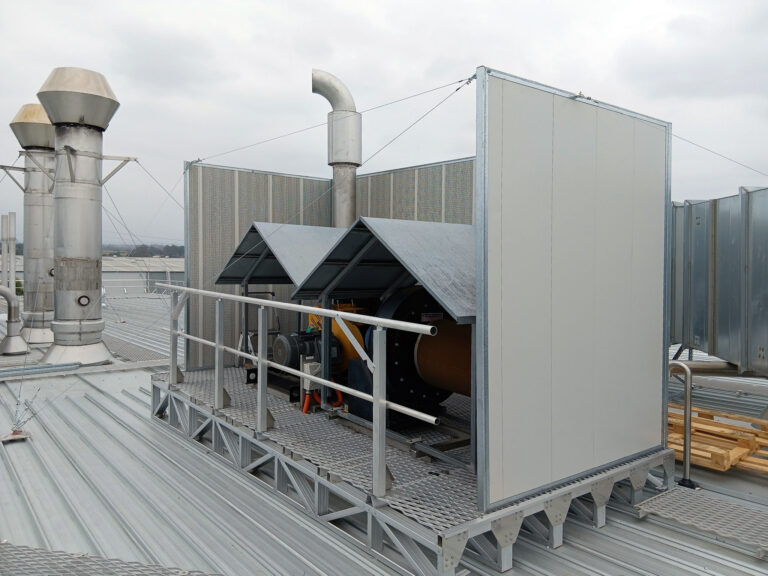
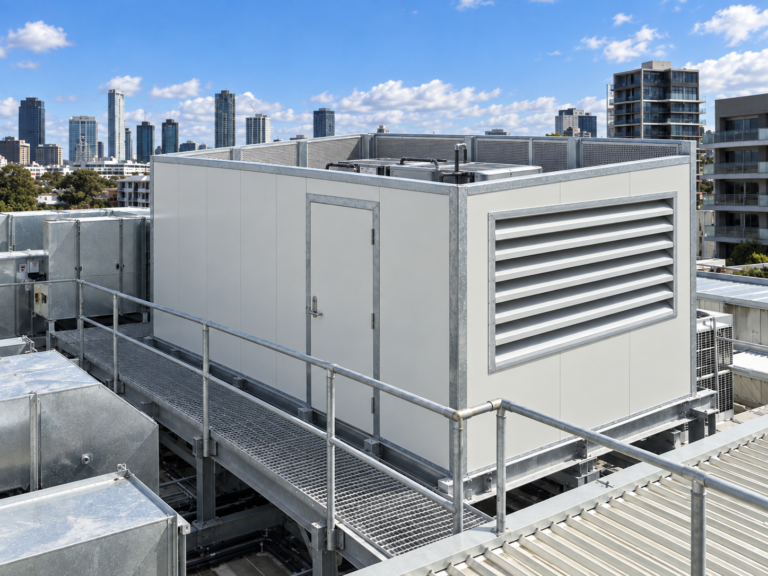
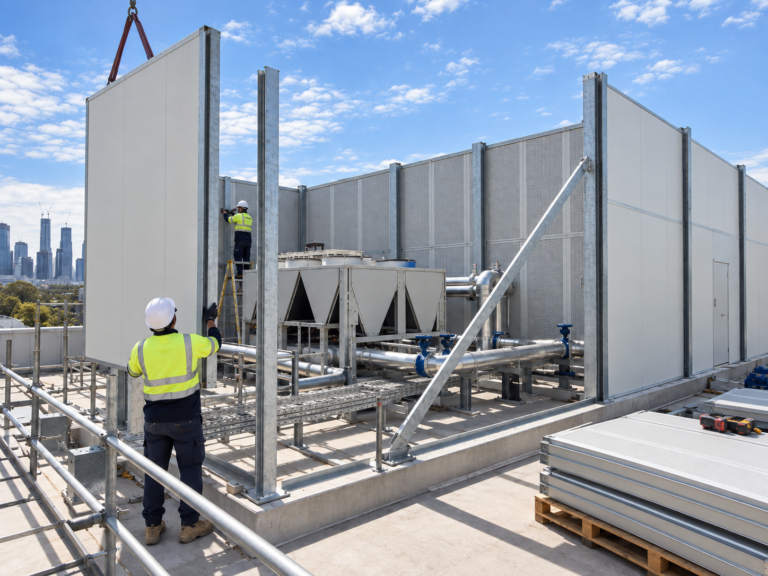
A recent Flexshield Group project demonstrated the value of early acoustic design. By reviewing TL targets and room absorption at concept stage, the team avoided structural changes during installation. Another industrial project used IL modelling to position silencers before mechanical layouts were finalised. Both examples show how early consideration of acoustic performance metrics protects both performance and project timelines.
Designing for silence is deliberate and scientific. It requires curiosity, precision, and practical insight. This is where AcousTech thrives, applying decades of observation, experimentation, and dedication to hearing protection through the Science of Silence.
To talk to the specialists at AcousTech, call 1300 508 232
Trusted by engineers, built for performance.
That’s the Science of Silence.