Taking a science-led look at IL, TL, and NR
In the world of engineered quiet, three measurements help us decode how sound moves across spaces: Insertion Loss, Transmission Loss, and Noise Reduction
Each tell part of the story, but when combined, they reveal how a structure or device shapes the acoustic performance of a workplace.
At AcousTech, we treat these measurements as more than numbers on a graph. They are clues. They help us piece together the physical behaviour of materials, air movement, and energy transfer. This blend of theory and real-world testing sits at the heart of the Science of Silence.
What does Insertion Loss IL measure?
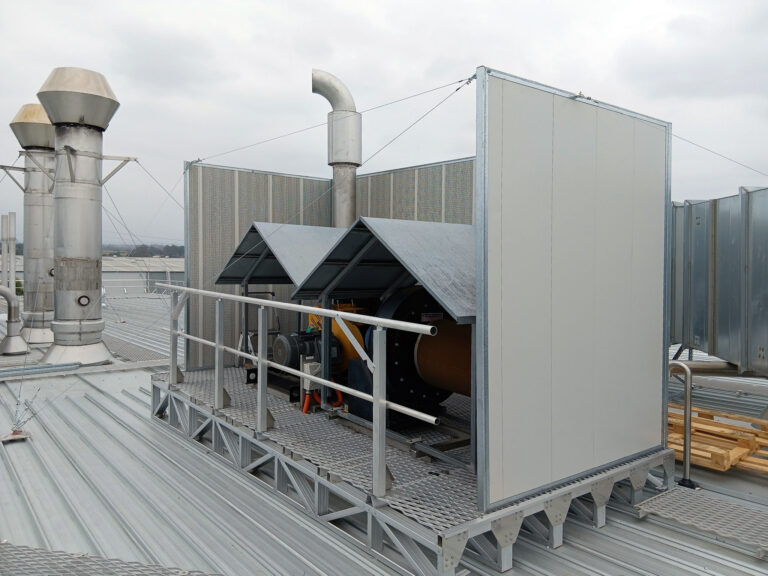
Insertion Loss or IL shows the impact of placing an acoustic device into a sound path. Silencers, acoustic liners, and similar components are assessed by comparing the sound level before and after their installation. Because these measurements occur under operating conditions, IL captures airflow, turbulence, and other dynamic factors that will influence performance.
Testing is frequency-based, commonly using octave bands from 125 Hz to 8 kHz. IL is calculated using the change in sound pressure level. Standards such as ISO 7235 guide the process and influence practices used throughout Australia.
IL is the preferred metric when the goal is to understand how a specific device behaves, rather than the acoustics of the room around it.
What does Transmission Loss TL tell us?
Transmission Loss or TL describes how a material or structure resists airborne sound moving from one side to the other. To determine TL, a barrier or panel is placed in a controlled test suite, and the difference between the incoming and transmitted energy is measured.
Heavier materials usually attenuate more low-frequency energy. Stiffness and coincidence effects shape performance across the rest of the spectrum. TL is measured in line with AS 1191, with acoustic ratings applied through AS/NZS 1276.1.
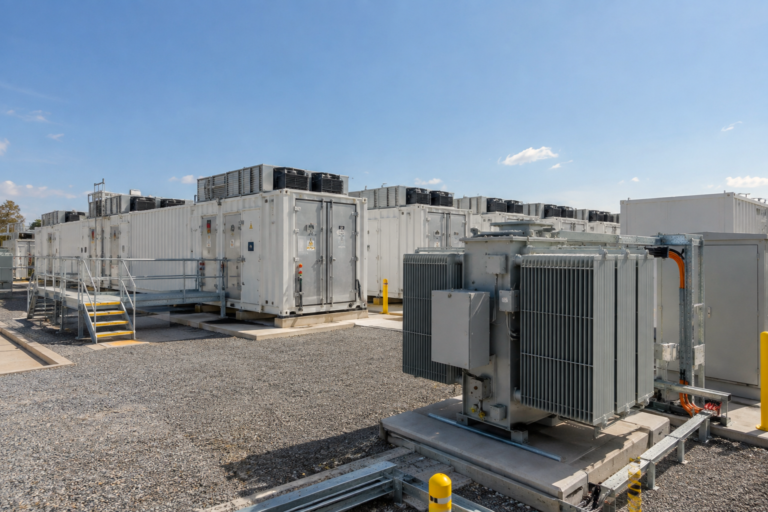
TL is a material-focused metric and a key reference when designing walls, screens, and engineered partitions.
What does Noise Reduction NR reveal?
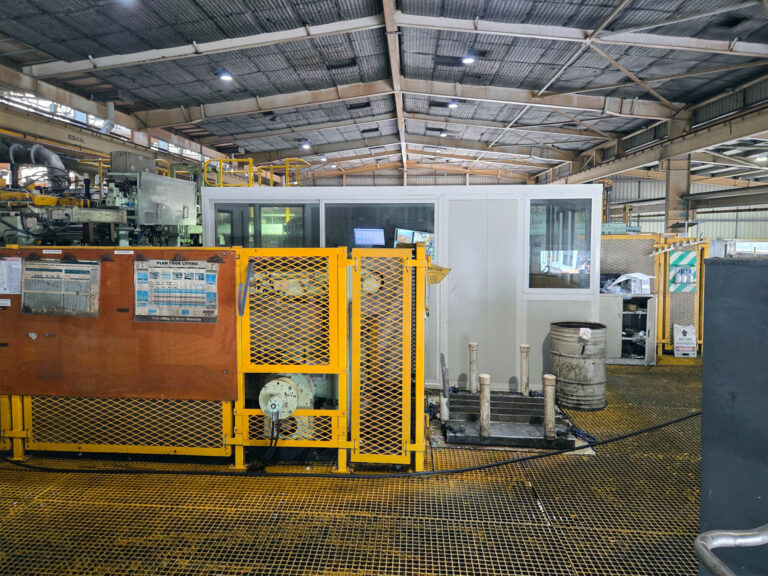
Noise Reduction or NR describes the difference in sound level between a source and a receiver within a real space. Because NR is measured on-site, it incorporates reflections, absorption, room geometry, and the behaviour of any barriers along the way.
NR equals the difference between the source level and the receiver level. Predictive models may be used, including the common relationship.
NR = TL + 10 log₁₀(S/A)
where S is partition area and A is the absorption of the receiving room.
NR is valuable for checking performance in the place where people actually work and hear. It links acoustic theory with the lived experience of operators, technicians, and engineers.
The 6 dB relationship in real world spaces
A well-known approximation states that NR will often sit around 6 dB higher than TL when the spaces on either side of a partition behave similarly in terms of reverberance. This adjustment reflects how sound interacts with real rooms, rather than simply in laboratory conditions.
Actual site conditions can shift this estimate. Absorption, room size, and flanking paths all play their part. IL sits outside this relationship because it measures device performance rather than structural behaviour.
Acoustic Metrics Summary Table
|
Metric
|
Focus
|
Where It Is Measured
|
Formula
|
Application
|
|
IL
|
Performance of a device
|
Operating conditions
|
IL = change in SPL
|
Silencers, ducts, exhaust systems
|
|
TL
|
Material isolation
|
Laboratory test suites
|
TL = 10 log (incident ÷ transmitted)
|
Walls, screens, engineered partitions
|
|
NR
|
Result in the environment
|
Field measurement
|
NR ≈ TL + 6 dB (typical estimate)
|
Room-to-room assessments and enclosures
|
Talk to the acoustic metrics experts
These metrics – IL, TL, and NR – are the backbone of acoustic prediction and verification. They give AcousTech’s designers, engineers, and acousticians the data they need to create workplaces that are shaped for health, safety, and productivity. When paired with thoughtful engineering and the right materials, acoustic metrics allow the Science of Silence to become something you can feel just as clearly as you can measure.
To talk to the specialists at AcousTech, call 1300 508 232.
Trusted by engineers, built for performance. Powered by Flexshield.
That’s the Science of Silence.